
 EN
EN

How to Identify the Best Hamburger Press for High-Volume Catering
Why Portion Control and Consistency Define Success in High-Volume Catering
The Cost Impact of Inconsistent Patty Sizes on Yield and Waste
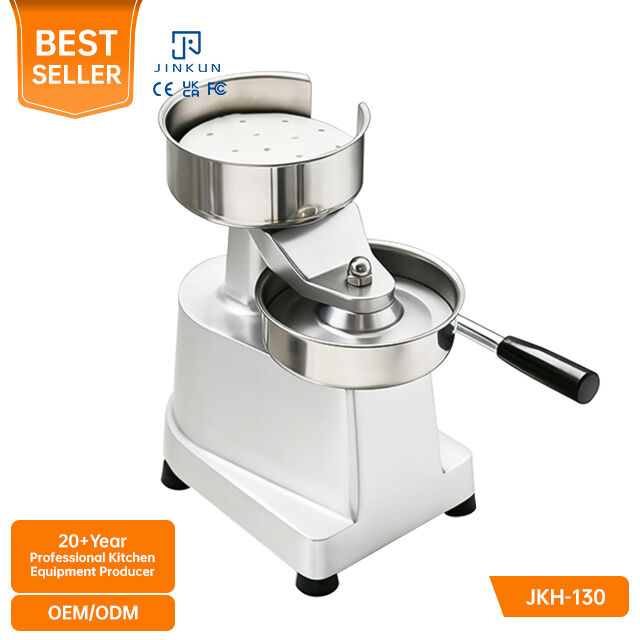
When burger portions aren't consistent, it really cuts into profits because of wasted ingredients, messed up yields, and all sorts of inefficiencies in the kitchen. Too small patties lead to angry customers who want their burgers remade, which takes extra time and costs more money on materials. On the flip side, when patties are too big, restaurants lose around 15 to 25 percent of their profit margin just from using more meat than needed. Think about a catering business making over 500 patties every day. If each patty is off by just one ounce, that adds up to around four grand lost each year. That's where commercial hamburger presses come in handy. These machines cut out all the guesswork by giving exactly the same portion size every single time. Restaurants report cutting down on food waste by about 30 percent and getting better value from their inventory stock. Plus, they don't have to sacrifice cooking speed or end up with subpar burgers.
How Standardized Patty Production Enhances Speed, Safety, and Brand Presentation
When patties are all the same size, kitchen lines run much smoother. The consistent thickness means cooking times are predictable, nobody has to worry about undercooked meat causing problems, and cooks don't spend time adjusting grills constantly. Restaurant kitchens actually see about 20 percent improvement in how fast they can get orders out when every patty needs exactly the same heat settings and flip timing. Using machines to shape the burgers cuts down on hands touching the meat, which lowers the chances of cross contamination and keeps things in line with those FDA food safety rules. Looking at it from a branding angle, people just feel better about their meal when everything looks consistent. Studies show around 78% of customers link uniform portions with good quality control. Getting a decent burger press makes all difference in creating that dependable restaurant experience, even when the place is packed with hungry customers waiting for their food.
Essential Features of a Commercial Hamburger Press Built for High-Volume Use
Stainless Steel Construction and Heat-Resistant Design for Continuous Operation
Kitchens that run at high volumes need gear built to take a real beating day after day. Stainless steel throughout the construction stands up better against those harsh meat acids and keeps going strong through all those cleaning sessions nobody looks forward to. The parts that get hot can handle temperatures up around 500 degrees Fahrenheit without bending out of shape near grills or steam tables. A study from the Food Service Equipment Journal back in 2019 showed something interesting too: stainless steel equipment needed repairs 37% less often than aluminum counterparts, which makes sense when thinking about long term costs. Design matters here as well. Equipment with no cracks or corners where bacteria love to hide makes life easier for kitchen staff. Plus, handles that are properly insulated protect workers' hands when things get busy in production mode. All these features together mean equipment lasts longer and meets health codes without constant hassle.
Precision Thickness Adjustment and Uniform Release for Reliable Patty Output
Consistent geometry is foundational—not just for portion control, but for cooking accuracy and yield integrity. Top-tier presses feature:
- Micrometer-adjustable plates (1/16"–1¼" range) with locking mechanisms to maintain precision across thousands of cycles
- Non-stick coatings or Teflon inserts enabling clean, tool-free release
- Calibrated compression force to achieve target density regardless of meat blend or temperature
Per NSF International (2021), a 1/8" thickness deviation alone causes an 18% increase in overcooking variance and a 7% yield loss per batch. Precision engineering ensures each patty meets exact specifications—minimizing waste, stabilizing cook times, and reinforcing brand standards at scale.
Matching Hamburger Press Type to Your Volume Tier and Kitchen Workflow
Manual Hamburger Press: Optimal for Mid-Volume Catering with Hands-On Control
When an operation needs to make between 100 and 400 burger patties each hour, manual pressing equipment gives cooks something no automated system can match – total control over how things go down. The kitchen staff just adjust the thickness and tightness as they work, which matters a lot when making those fancy gourmet burgers or dealing with different types of ground meat throughout the day. These machines are made from heavy duty stainless steel but still small enough to squeeze into tight spaces behind the counter where most food prep happens. We've seen restaurants cut their meat waste by around 25% simply by switching from hand forming to using these presses. Less waste means more profit, and best part is there's no complicated tech involved here so nobody needs special training to get started.
Semi-Automatic and Fully Automatic Burger Machines for 500+ Patties/Hour Operations
Once production needs go past around 500 burgers an hour, going automated starts making real business sense. The semi-auto grinders can crank out over 600 consistent patties each hour while just needing someone to load the ground beef. Full automation takes it even further, hitting well above 1,000 units per hour thanks to built-in portion control, shaping mechanisms, and automatic stacking features. These setups typically slash staffing expenses by about 30 percent, minimize employee contact with raw materials, and help maintain strict food safety standards that meet NSF requirements. When shopping for equipment, look for units with easy-to-clean parts that snap apart quickly, straightforward interface panels, and systems that fit smoothly into existing kitchen layouts. Good machines deliver dependable performance day after day without cutting corners on cleanliness or output speed.
Practical Selection Criteria: Space, Safety, Cleanability, and ROI for Catering Teams
When picking out a hamburger press, there are really four main things to think about: how much space it takes up, keeping staff safe, meeting cleaning standards, and making sure it pays for itself over time. Kitchens that are tight on room should go for something compact that can be stored vertically. Look for models around 24 inches wide or smaller so they don't block access to work areas while still getting enough burgers cooked. Safety is a big deal too. The base needs good traction to stay put, handles that won't melt at high temps (ideally rated above 400 degrees Fahrenheit), and all moving parts should be covered to avoid fingers getting caught when workers are pressing patties fast. For cleaning purposes, stick with units made from smooth stainless steel throughout and check if parts come apart easily for washing in the dishwasher. This matters a lot for those restaurant health checks that happen every year according to new FDA rules from 2023.
Looking at return on investment needs to consider all angles, not just numbers on paper. When restaurants start controlling portions accurately, they see real money saved right away. The numbers tell the story pretty clearly too. Places that switched to calibrated presses waste about 18% less meat compared to those making patties by hand. For a restaurant doing around 500 meals each day, this adds up to roughly $740k saved every year according to research from the Ponemon Institute back in 2023. And there's more good news beyond just meat savings. These machines last much longer than regular kitchen equipment, typically between 7 to 10 years instead of the usual 2 or 3 years we see with consumer grade stuff. Plus, certified models actually consume 30% less electricity while running. Most catering businesses find that their investment pays off within 12 to 18 months when they calculate based on their actual meal volumes. Some even break even sooner depending on how frequently they operate.
😊 Key Insight: A $1,200 press that reduces weekly meat waste by 15 lbs ($45 savings) pays for itself in six months at a 300-patties-per-day operation.
Ultimately, the optimal press integrates invisibly into workflow—delivering measurable cost control, regulatory confidence, and consistent brand execution at scale.