
 EN
EN

Why a Durable Bone Saw Machine Is Critical for Meat Processing Safety
Durability Directly Impacts Operational Safety and Uptime
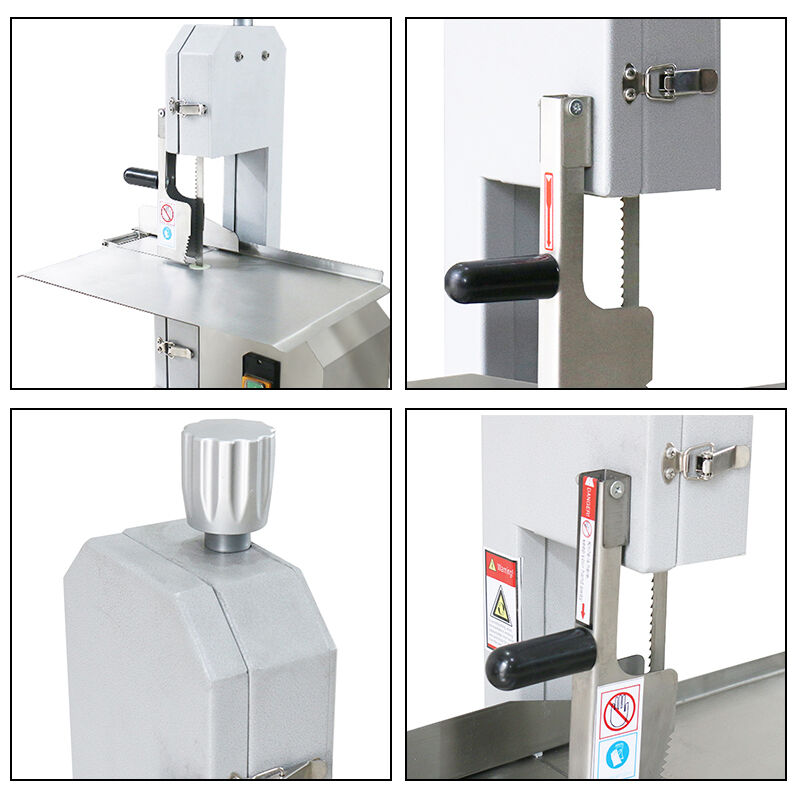
How Mechanical Fatigue in High-Volume Butchery Compromises Blade Alignment and Guard Integrity
The constant pounding of mechanical fatigue takes its toll on bone saw machines used daily in busy butcher shops, and this really impacts safety down the line. When blades stay under pressure for too long, their alignment starts drifting off track. This makes kickbacks more likely and leads to uneven cuts across the board. According to some recent numbers from Industry Safety Reports back in 2023, injuries actually go up around 25% when this happens. At the same time, those protective guards begin to lose their strength over time, which means workers might accidentally get too close to spinning parts without realizing it. The wear and tear doesn't stop there either. Joints and fasteners start breaking down faster than normal, creating real danger spots especially during rush hours when everyone is scrambling. Keep an eye out for things like strange vibrations or noticeable wobbles in the machine - these are warning signs that show up before bigger problems occur. Investing in tougher designs made with stronger materials upfront goes a long way toward keeping everyone safe while still getting good results day after day.
The Hidden Cost of Low-Durability Bone Saw Machines: Downtime, Repairs, and Regulatory Delays
Bone saw machines that don't last long end up costing way more than just what was paid upfront. When these machines break down unexpectedly, production stops cold, and facilities can lose upwards of $10k every single hour according to a recent study on operational efficiency. The constant need for fixes really eats into maintenance budgets too, with replacement parts and technician hours adding up fast. And then there's the safety issue. As time goes on, things like guards getting loose or blades going out of alignment become real problems. This often leads to failed USDA inspections which means delays getting certified again, possible fines from regulators, or even having to shut operations down temporarily while everything gets sorted out. Smart operators know that spending extra money on durable, well-made equipment pays off in the long run by lasting longer, staying compliant with regulations, and protecting both bottom lines and day-to-day workflow.
Food Safety Compliance Demands Hygienic Durability in Bone Saw Machines
Microbial Trapping Risks in Cracked or Warped Housings of Non-Durable Bone Saw Machines
Tiny cracks in blade housings and warped frames actually become little hiding spots for bad bacteria, even after all the regular cleaning procedures are done. Studies indicate that rough surfaces tend to hold about twice as much of those pesky biofilm bacteria such as Listeria and Salmonella compared to smooth ones. The constant wear and tear on equipment eventually breaks down the housing material, creating hairline fractures less than half a millimeter deep. These tiny gaps are practically invisible during normal inspections but still act as breeding grounds for contaminants. Such damaged surfaces completely mess up the effectiveness of standard foam and rinse cleaning methods. Meat processors have seen their chances of product recalls jump by around six times when these issues exist, based on actual FDA tracking of outbreaks. And when there's even suspicion of contamination, factories must stop everything while investigators look into what went wrong. This kind of shutdown costs companies roughly seven hundred forty thousand dollars every single hour they're not operating, according to recent industry reports from Ponemon Institute.
USDA-FDA Requirements for Seamless, Clean-in-Place (CIP) Surfaces on Bone Saw Machines
Regulations require all food-contact surfaces to withstand 200+ annual CIP cycles without degradation. Key technical standards include:
| Requirement | Technical Standard | Purpose |
|---|---|---|
| Surface finish smoothness | Ra ≤ 0.8 µm | Prevents bacterial adhesion in microscopic grooves |
| Corner radii | ≥ 3mm | Eliminates residue-trapping sharp angles |
| Material corrosion resistance | Passivated 316L stainless | Maintains integrity against acidic detergents and chloride exposure |
CIP compatibility demands fully welded seams—no bolts, no crevices—where organic matter could accumulate. Non-compliant equipment fails USDA audits for harboring pathogens in joints, a leading cause of regulatory action against meat processors.
Safety-Critical Engineering: How Durability Enables Reliable Protective Features
Blade Guard Interlocks, Emergency Stop Latency, and Structural Rigidity in Bone Saw Machines
How durable something is really affects if those safety features actually work when put to the test in real situations. Take blade guard interlocks for example they need everything lined up just right thanks to parts that resist wearing down over time. When the housing starts to warp because materials get tired from constant use, these guards just won't engage properly anymore. The same goes for emergency stop systems too. These require strong, rigid structures so there's no lag time when stopping is needed. Frames that flex instead of holding firm basically soak up energy, which means slower stops. We're talking about serious consequences here too according to Industry Safety Report 2023, even half a second delay raises injury chances by almost 40% during cutting tasks. There are basically three things related to durability that keep all this working reliably:
- Interlock reliability: Hardened steel hinges withstand 20,000+ cycles without deformation
- Stop-response consistency: Rigid frames transfer force instantaneously to brake systems
- Vibration dampening: Dense castings prevent harmonic resonance that loosens safety sensors
Corrosion-resistant alloys further prevent electrical failures in washdown environments. Without these durable foundations, protective features degrade into latent hazards.
Corrosion Resistance as a Core Dimension of Bone Saw Machine Durability
AISI 420 vs. 440C Stainless Steel: Hardness, Passivation Stability, and Pitting Resistance in Wet Meat Environments
Corrosion resistance matters a lot in meat processing plants where moisture levels are high, not only because equipment lasts longer but also because it keeps food safe from contamination. Take AISI 420 stainless steel with around 12 to 14% chromium content. It's reasonably hard but doesn't hold up well against blood, salt solutions, or strong cleaning chemicals which cause pits to form on the surface. On the other hand, AISI 440C stainless steel contains between 16 and 18% chromium and develops a much better protective layer that actually repairs itself when damaged. Why does this matter? Those tiny pits become breeding grounds for dangerous bacteria like Listeria. Higher chromium content means surfaces stay intact even after repeated cleaning throughout the day. According to guidelines set by both USDA and FDA, any stainless steel used in food processing needs at least 16% chromium to work properly during automated cleaning processes and maintain blade performance over time. Meat processors who choose these high chromium materials significantly cut down on microbial contamination risks. And let's not forget the bottom line benefits either. A recent study showed companies can save about $740,000 each year by avoiding production stoppages and product recalls caused by metal failures.