
 EN
EN

How to Select the Right Hamburger Press for Your Catering Business Needs
Understanding the Role of a Hamburger Press in Commercial Catering
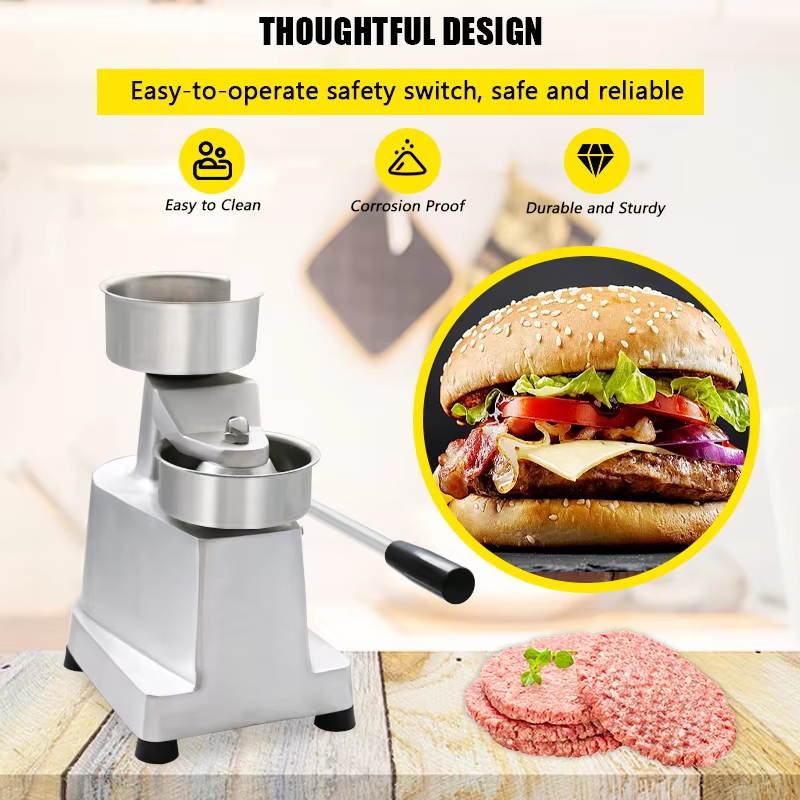
The Importance of a Commercial Hamburger Press in High-Volume Food Service
Hamburger presses for commercial use make mass food production much easier, letting restaurants crank out around 300 consistently sized patties every hour. These robust machines get rid of all those pesky size differences that happen when people shape burgers by hand. Restaurants report cutting their prep time anywhere between 40 to 60 percent after switching from manual pressing, according to recent tests at several chain locations last year. With so much saved on burger shaping, kitchen workers can actually spend more time checking things like doneness levels and seasoning distribution throughout busy lunch rushes.
How Uniform Patty Shape Ensures Consistent Cooking and Presentation
A 1/8" thickness variation can extend grill times by 25% for thicker patties, according to culinary engineering studies. Hamburger presses ensure consistent density and diameter, so every patty reaches the safe internal temperature of 165°F simultaneously while maintaining professional presentation across events.
Daily Production Volume Considerations When Choosing Equipment
Caterers producing 1,000+ burgers daily need industrial-grade presses with quick-release mechanisms and NSF-certified stainless steel construction. The National Foodservice Equipment Association recommends dual-piston electric models for operations exceeding 60 patties per minute, while manual units are sufficient for pop-up kitchens serving fewer than 150 portions per event.
Manual vs Electric Hamburger Presses: Choosing Based on Operational Scale
Comparing Labor Savings and Operational Efficiency Benefits
Electric hamburger presses reduce labor by 60–80% compared to hand-forming, making them ideal for large-scale catering. Operations producing 300+ patties hourly benefit from sustained output during rushes. High-volume kitchens report 27% faster assembly times when using automated presses during events requiring rapid burger production.
When Manual Presses Offer Better Control and Portion Accuracy
Manual presses provide superior tactile control, preferred when shaping delicate or premium ingredients like Wagyu beef or plant-based patties. Their mechanical design prevents over-compression and requires no power, making them well-suited for outdoor pop-up events with limited electrical access.
Electric Models for Large-Scale Catering With Adjustable Settings
Commercial electric presses feature programmable pressure controls (5–50 lbs) and interchangeable die plates for forming 2oz sliders to 8oz jumbo patties. Built with temperature-resistant stainless steel, these units support continuous operation, with top models producing up to 1,200 patties per hour—equivalent to three full-time workers.
Are Electric Hamburger Presses Worth the ROI for Small Caterers?
Small catering operations that handle under 100 guests per event need to really think through their expenses versus benefits when choosing equipment. Electric food presses cost anywhere between eight hundred to two thousand five hundred dollars, which is way more expensive than the manual versions that usually run around fifty to three hundred bucks. But here's the catch: most catering businesses that manage to save at least fifteen labor hours each month find they can get their money back within twelve to eighteen months. Many smart operators actually go with a mix of both approaches. They'll use the cheaper manual presses for smaller jobs while reserving rentals of electric units for bigger events where time savings matter most. This strategy works well in practice, even if it doesn't sound as fancy as those ROI calculations everyone loves to cite.
Material and Build Quality: Stainless Steel vs Other Construction Types
Durability and Maintenance Differences Between Stainless Steel and Cast Iron
In commercial kitchens, stainless steel generally beats cast iron hands down because it doesn't corrode easily and needs almost no maintenance. Cast iron cookware demands constant attention - those pans need regular seasoning and must be dried completely after each use to avoid rust problems. Stainless steel surfaces don't pit when exposed to acidic ingredients like tomatoes or citrus, and they hold up much better during repeated sanitization cycles that are standard in restaurant environments. Plus, kitchen staff report saving around 30 to 40 minutes per day on cleaning tasks when switching from traditional cast iron to stainless steel equipment, mainly because there's no need to worry about food getting stuck in pores or causing stubborn stains.
Why Stainless Steel Hamburger Presses Dominate Commercial Kitchens
In most commercial kitchens across the country, stainless steel reigns supreme because it ticks all the boxes for food safety standards. The material complies with NSF guidelines, can handle temperatures well beyond 500 degrees Fahrenheit, and has that smooth non-porous surface required by FDA regulations. According to recent market research from last year, around eight out of ten caterers opt for stainless steel pressing equipment since they just hold up better during those grueling shifts where hundreds of burgers need flipping every single hour. When compared to cheaper options like aluminum or composite materials, stainless doesn't warp or bend even after years of constant pounding. Take any busy grill station at a steakhouse chain - those griddles stay flat and level throughout their lifespan, which means each burger comes out exactly the same thickness day after day.
Nonstick Coatings and Their Role in Food Safety and Reduced Contamination Risk
Nonstick coatings like PTFE help burgers stay juicier since they cut down on shrinkage about 15%, mainly because there's less friction between the meat and the pan surface. Ceramic coatings take this a step further by letting manufacturers make plant-based patties without adding any oil at all. When it comes to keeping things clean, good quality coatings that last over 10 thousand cooking cycles really stand out from older cast iron options where bacteria tends to hide in those little grooves. Want your nonstick surface to last longer? Metal spatulas and harsh scrubbing pads are definitely off limits. Most kitchens find that with gentle handling and regular cleaning, these surfaces can stick around two or even three times longer than expected according to industry maintenance reports.
Portion Control and Cost Efficiency Through Accurate Patty Formation
Achieving Precise Patty Weight to Minimize Ingredient Waste
Manual patty formation leads to up to 15% meat waste due to inconsistent sizing (Food Service Industry Report 2023). A calibrated hamburger press ensures exact portioning, reducing overuse of costly ingredients. For midsize caterers using premium beef blends, even a 5% reduction in waste can yield annual savings of $1,200.
Standardizing Output Across Events Using Calibrated Hamburger Presses
Calibrated presses deliver uniform 4oz or 6oz patties consistently across all events, preventing customer dissatisfaction from uneven portions. Uniform thickness also optimizes cooking efficiency, cutting fuel consumption by up to 8% compared to irregular hand-formed patties (Catering Equipment Journal 2023).
Calculating ROI Through Meat Cost Optimization and Labor Savings
Key financial benefits include:
- Material costs: 12–18% reduction in meat waste via precise portioning
-
Labor efficiency: Output increases from 90 patties/hour manually to 300+/hour with a press
Most commercial presses achieve ROI within 3–6 months, with high-volume operations seeing returns in as little as 8 weeks.
Case Study: Caterer Reduces Meat Costs by 18% Using Portion-Controlled Presses
A Midwest events company cut annual beef expenses by $14,000 (18% savings) after adopting a stainless steel hamburger press with portion control. The $1,850 investment paid for itself in 11 weeks, while kitchen throughput rose by 25% during peak wedding seasons.
Matching Hamburger Press Type to Kitchen Environment and Menu Needs
Selecting Equipment Based on Kitchen Space and Volume Demands
When picking out a burger press, it really comes down to two main factors space available and how many burgers need to be made. The smaller electric presses that take up less than 24 inches on the counter are great for mobile kitchens like food trucks or pop-up events. But for larger operations such as banquet halls where hundreds of patties get flipped every hour, bigger machines just make sense. A recent look at commercial kitchen gear from earlier this year showed something interesting. Nearly three quarters of catering businesses who switched to compact pressing systems saved around 19 extra minutes when making 100 burgers compared to their old bulkier equipment. That kind of time saving adds up fast during busy service periods.
Hamburger Presses for Mobile vs. Fixed Catering Operations
For those running food trucks or pop-up events, lightweight grills weighing less than 15 pounds are a must have. These portable options usually come with rubberized feet to stay put on uneven surfaces and work great with DC power sources. On the other hand, commercial kitchens that stay in one place tend to go for heavy duty electric models plugged directly into 220 volts. Some of these machines can crank out around 1,200 perfectly shaped burgers during a single work shift. Most operators still swear by stainless steel construction for everything from carts to stationary units. According to recent industry reports, about 8 out of 10 food service professionals list resistance to rust and corrosion as their main reason for choosing stainless steel equipment. After all, nobody wants their investment turning green after a few months of daily use.
Expanding Menu Versatility: Using Presses for Grilled Cheese, Quesadillas, and More
Forward-thinking caterers repurpose hamburger presses to create:
- Panini-style grilled cheese with even browning (ideal at 1" thickness)
- Quesadilla disks matching standard plating sizes
- Stuffed dessert patties (e.g., s’mores, fruit fillings) for themed events
This multi-use strategy boosts equipment ROI by 22% compared to single-function devices (Catering Profitability Report 2024).
Trend: Compact, Multi-Functional Hamburger Presses in Event Catering
The growing popularity of compact 10"×8" dual-purpose units reflects evolving client expectations—63% now request at least two protein options (beef, poultry, plant-based) per event. Models with swappable molds for sliders, falafel, or vegan nuggets help mid-sized operations save approximately $1,200 annually in equipment and storage costs.