
 EN
EN
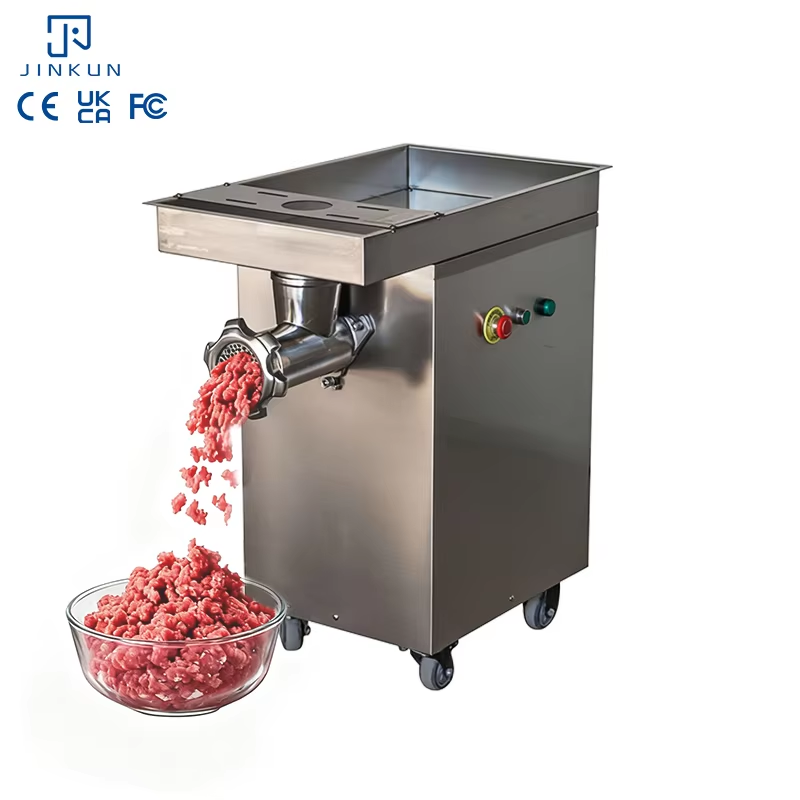
Meat Grinder as a Critical Control Point in HACCP-Based Food Safety Systems
Why ground meat poses higher microbial risk than whole cuts
Grinding dramatically increases meat’s surface area, distributing surface pathogens—such as Salmonella and E. coli—throughout the product. In contrast, whole cuts confine contaminants to the exterior. This homogenization creates ideal conditions for microbial proliferation, contributing to 24% of beef-related foodborne illness outbreaks (CDC, 2022). The mechanical process also introduces cross-contamination risks from equipment contact surfaces, making strict temperature control and sanitation non-negotiable.
How proper meat grinder operation aligns with HACCP principles for biological hazard control
Designating grinding as a Critical Control Point (CCP) enables proactive hazard mitigation under HACCP’s preventive framework. Establishing critical limits—like maintaining meat temperatures at or below 4°C during processing—and monitoring grind size and residence time allows facilities to control biological hazards at their source. This directly supports HACCP Principle 3 (establishing critical limits) and Principle 4 (monitoring procedures), transforming the meat grinder from a contamination vector into a validated control barrier.
Hygienic Design Features That Make Modern Meat Grinders Safer and Audit-Ready
IP69K-rated construction and crevice-free stainless steel eliminating biofilm hotspots
Modern meat grinders feature IP69K-rated enclosures—capable of withstanding high-pressure, high-temperature sterilization—and seamless 304-grade stainless steel surfaces. This material reduces bacterial adhesion by 72% compared to coated alternatives (Food Safety Magazine, 2023). Radius-edge designs and continuous welds eliminate microscopic crevices where Listeria monocytogenes can form resilient biofilms—a primary focus of USDA swab testing and audit scrutiny.
Self-cleaning mechanisms and tool-less disassembly reducing sanitation time and human error
Innovations such as magnetic knife housings and tapered auger designs enable full disassembly in under 90 seconds. Clean-in-Place (CIP) compatibility ensures automated chemical cycles reach all product-contact surfaces, while dishwasher-safe components are validated for over 100 sanitation cycles without degradation. These features reduce disassembly labor by 43% and sanitation-related errors by 31% (Equipment Efficiency Report, 2023), supporting compliance with FSIS Directive 7120.1. Eliminating specialized tools also prevents calibration inconsistencies during reassembly—a frequent finding in third-party audits.
Grinding Process Parameters That Directly Impact Microbial Load and Compliance
Temperature control: Preventing pathogen proliferation during grinding (FSIS threshold: ≤12°C)
FSIS Directive 11,000.1 mandates meat temperatures remain at or below 12°C (53.6°F) during grinding. At this threshold, Salmonella and E. coli growth rates drop by up to 90% compared to ambient processing; L. monocytogenes, which doubles every 40 minutes at 15°C, shows negligible replication. Facilities using real-time thermal sensors in hoppers report consistent 3-log reductions in microbial counts (Food Protection Trends, 2023).
Residence time, shear stress, and blade sharpness effects on cross-contamination risk
Extended residence time in grinding chambers increases bacterial transfer by 45% per additional 30 seconds (Journal of Food Engineering, 2022). Dull blades generate excess friction—raising product temperature by 2–5°C—and create micro-particles that shield pathogens. Blades maintained above 15° Rockwell hardness reduce cross-contamination by cutting cleanly through tissue rather than tearing, minimizing fluid release and improving flow efficiency. Validation studies show replacing blades every 250 operating hours achieves up to a 3-log reduction in microbial load.
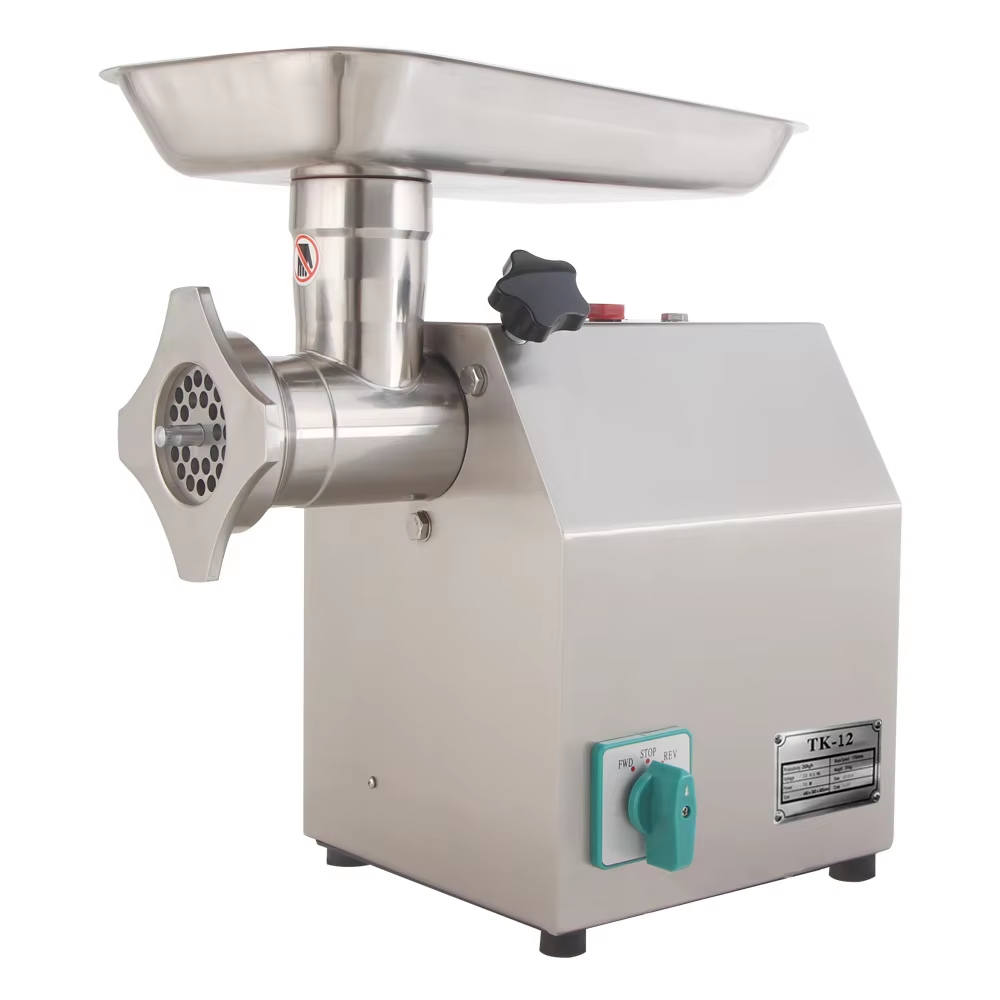
Sanitation, Maintenance, and Documentation Protocols for USDA-FSIS Compliance
CIP validation and pre-operational checks per FSIS Directive 7120.1
Clean-in-Place (CIP) systems used for meat grinder sanitation must be rigorously validated per FSIS Directive 7120.1—demonstrating effective reduction of Salmonella and L. monocytogenes via ATP swab testing or microbiological sampling. Pre-operational checks must confirm:
- Correct temperature and pressure parameters during chemical cycles
- Absence of residual organic matter in grinding heads
- Use of NSF H1-compliant lubricants
Under FSMA (2011), equipment manufacturers must supply validated cleaning procedures. Failure to do so may trigger USDA enforcement actions costing processors $12,000+ per day in operational stoppages.
Preventive maintenance schedules and traceable sanitation logs for audit readiness
Audit-ready documentation significantly reduces non-conformances during FSIS Food Safety Assessments. Best practices include:
- Digitized maintenance logs tracking blade replacements, seal integrity tests, and motor servicing
- Time-stamped sanitation records verifying full disassembly and completion of validated cleaning cycles
- Corrective action reports directly linked to microbial swab test failures
Facilities using digital documentation resolve 74% of audit findings faster (FSIS, 2023). Consistent preventive maintenance ensures worn components—especially dull blades that harbor pathogens—are replaced before performance degradation compromises food safety.
Table of Contents
- Meat Grinder as a Critical Control Point in HACCP-Based Food Safety Systems
- Hygienic Design Features That Make Modern Meat Grinders Safer and Audit-Ready
- Grinding Process Parameters That Directly Impact Microbial Load and Compliance
- Sanitation, Maintenance, and Documentation Protocols for USDA-FSIS Compliance