
 EN
EN
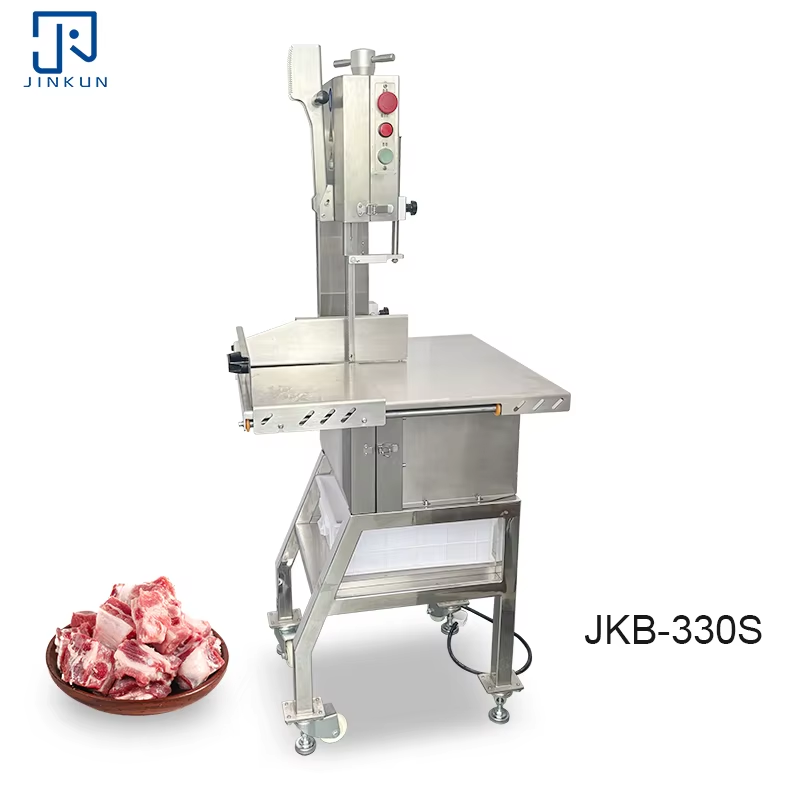
The Impact of Noise on Operator Health and Indoor Workflow Efficiency
Hearing loss risks and fatigue from chronic exposure in confined processing areas
Prolonged exposure to high-decibel noise in confined meat processing environments poses serious, irreversible risks to operator health. In enclosed spaces—where sound reflects and amplifies—conventional bone saw machines routinely exceed 85 dB(A), the threshold at which cumulative hearing damage begins. Chronic exposure not only accelerates sensorineural hearing loss but also contributes to cardiovascular strain, elevated cortisol levels, and hypertension. Occupational health analyses link such conditions to a 25% higher incidence of workplace accidents and a 30% reduction in alertness—factors that compound safety hazards in precision-driven tasks.
How excessive noise disrupts communication, precision, and shift productivity
Excessive noise directly undermines operational reliability by impairing verbal communication and cognitive performance. When bone saws operate above 90 dB(A), speech intelligibility drops sharply beyond arm’s length, triggering repeated line stoppages for safety verification. This fragmentation results in:
- 18% longer carcass processing times due to redundant verbal confirmations
- 40% more blade alignment errors stemming from diminished concentration
- A 12% decline in per-shift output from accumulated micro-delays
Neuroscience research confirms that sustained auditory overload impairs working memory and decision-making accuracy—particularly critical during high-precision procedures like spinal column separation, where miscut frequency rises by 22%. Rework cycles and safety pauses collectively erode up to 150 minutes of productive time per 8-hour shift, creating measurable throughput constraints in volume-sensitive facilities.
Regulatory Requirements for Indoor Bone Saw Machine Noise Levels
OSHA PELs, EU Directive 2003/10/EC, and ISO 11201–11204 compliance benchmarks
Indoor meat processing facilities must meet stringent global noise regulations to safeguard workers and maintain operational continuity. OSHA enforces a Permissible Exposure Limit (PEL) of 90 dB(A) as an 8-hour time-weighted average—and mandates hearing conservation programs once levels reach 85 dB(A). In contrast, EU Directive 2003/10/EC sets stricter limits: 87 dB(A) daily exposure and 140 dB(C) peak sound pressure, with non-compliance potentially triggering production halts. ISO 11201–11204 standards provide globally harmonized testing methodologies for equipment noise emission declarations, ensuring consistent, auditable measurement across jurisdictions. Facilities using bone saw machines must conduct certified sound testing to avoid penalties—including OSHA fines averaging $15,625 per violation (2023 data) and EU-mandated operational suspensions.
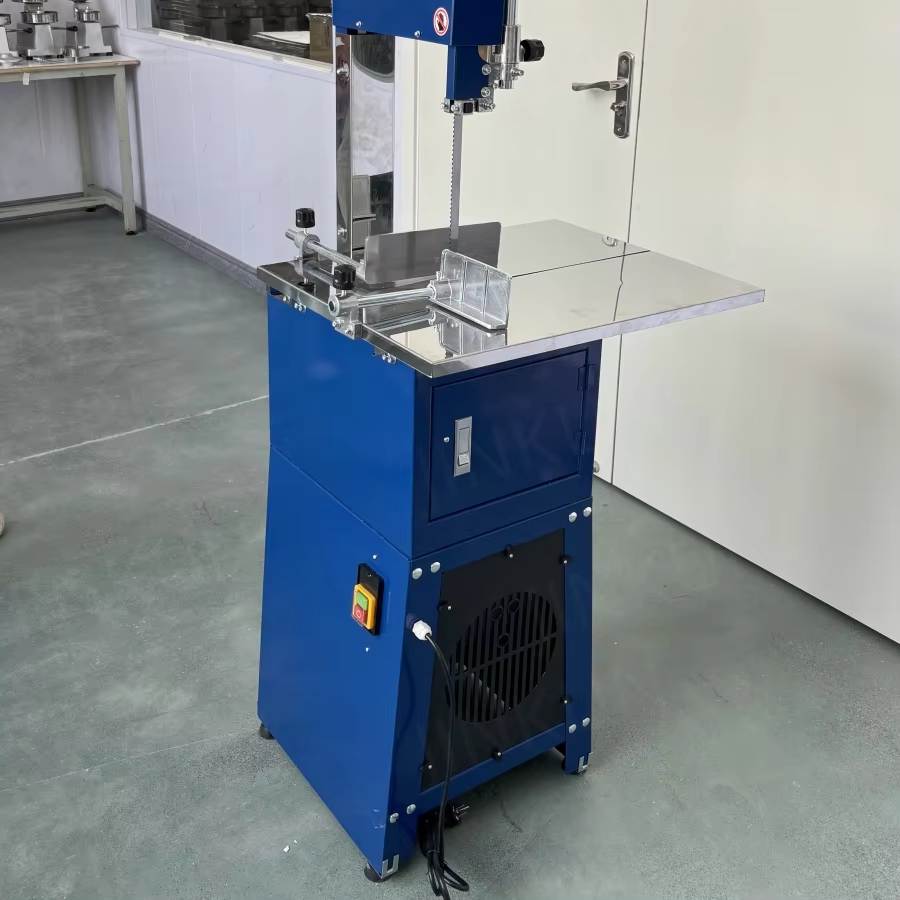
Engineering Solutions That Make Bone Saw Machines Quiet Enough for Indoor Use
Brushless motor systems and vibration-isolated gearboxes
Modern low-noise bone saw machines rely on brushless DC motors, which eliminate the friction, sparking, and electromagnetic noise inherent in brushed designs. Coupled with vibration-isolated gearboxes—featuring resilient mounts and precision-machined components—these systems suppress structural resonance at the source. Independent testing shows this integration reduces operating noise by 6–8 dB(A), significantly improving the acoustic profile of processing environments.
Acoustic enclosures, sound-dampening housings, and blade damping technologies
A layered engineering approach targets all noise transmission paths:
- Acoustic enclosures lined with mass-loaded vinyl exteriors and absorption foam interiors
- Composite housings engineered with constrained-layer damping to dissipate vibrational energy
- Tuned blade dampers, such as mass-spring absorbers, that neutralize high-frequency harmonic peaks
When properly sealed and ventilated for thermal management, these solutions reduce airborne noise propagation by ≥12 dB(A)—enabling consistent operation within indoor limits of 80–85 dB(A).
Operational and Business Advantages of Low-Noise Bone Saw Machines Indoors
Low-noise bone saw machines deliver tangible, cross-functional value. By maintaining sound levels below 80 dB(A)—well under OSHA’s 90 dB(A) PEL—facilities reduce operator fatigue by up to 30%, minimize noise-induced miscommunication, and prevent costly yield loss from miscuts or rework. Reported benefits include 15–20% higher throughput from sustained focus during extended shifts and a 40% drop in safety incidents tied to auditory distraction. Quieter operations also mitigate community complaints, supporting 24/7 production without zoning constraints. With ROI typically realized in 12–18 months—driven by avoided regulatory fines, lower workers’ compensation claims, and reduced staff turnover—low-noise bone saw technology strengthens both human and operational resilience in modern meat processing.