
 EN
EN
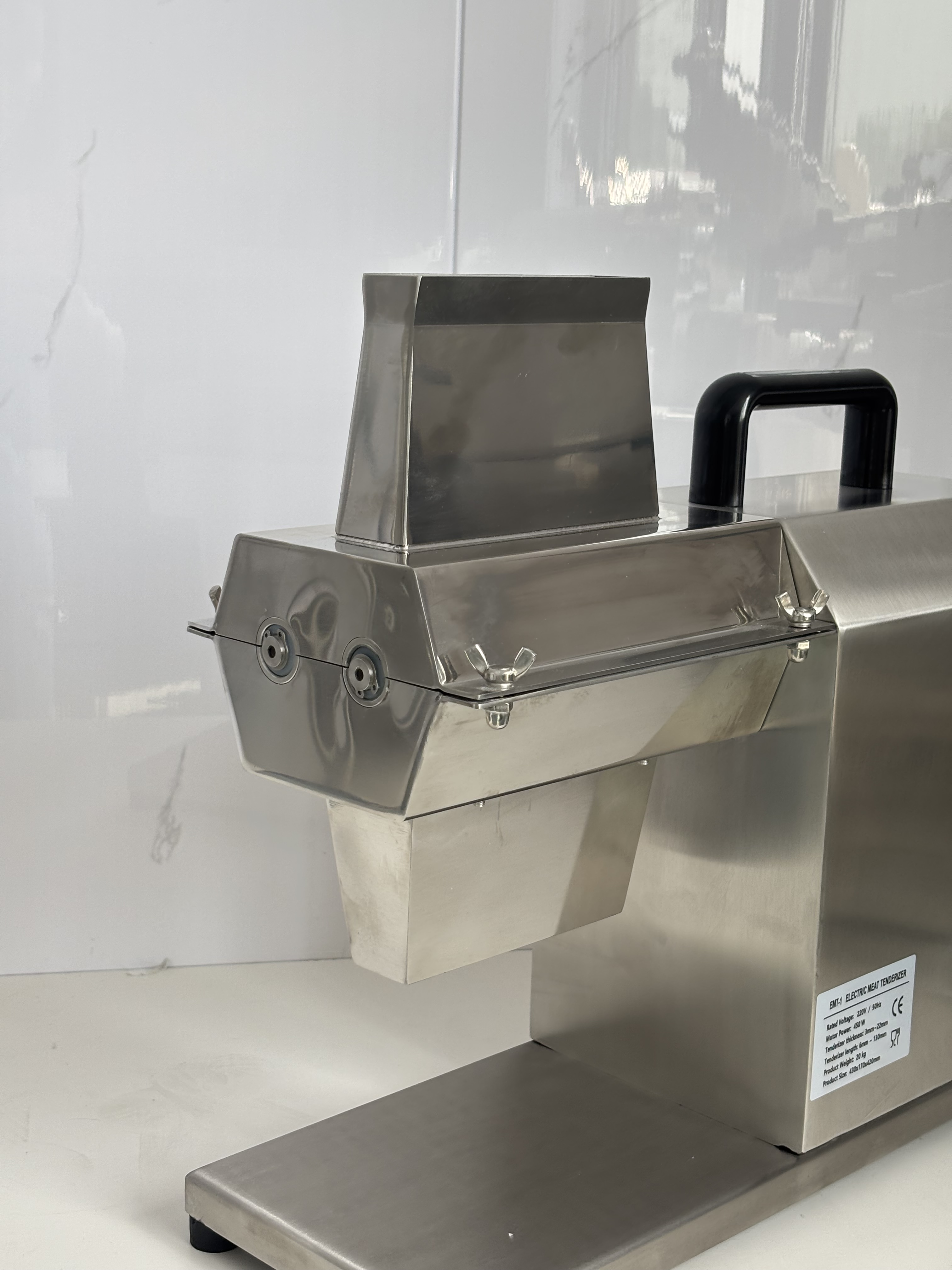
The Physics of Mechanical Tenderization: Why Disrupted Fibers Cook Faster
Micro-tears and collagen breakdown: accelerating heat penetration in dense cuts
A meat tenderizer works by making tiny holes in the muscle fibers and breaking apart the collagen structures, which changes how heat moves through the meat. Collagen itself is basically a thick web of proteins found in tougher cuts such as chuck or brisket, and when intact, it acts like insulation that slows down cooking. Once we break those collagen barriers with mechanical force, what happens is pretty interesting – steam and heat can now get into the center much faster. According to some research on thermal properties, this actually speeds up heat penetration anywhere from 35% to maybe even 50%. That means real world differences too. Take a regular chuck roast for instance. Without tenderizing, it might need around 3 and a half hours in the oven for braising. But after running it through a tenderizer first? Often done in just over 2 and a quarter hours instead. The bonus here isn't just faster cooking times either. Chefs save money on energy costs while getting more dishes ready throughout the day, all without losing any of that desirable tenderness or ending up with wasted food.
Thermal conductivity comparison: intact vs. tenderized connective tissue
| Tissue State | Heat Transfer Rate | Cooking Time Reduction |
|---|---|---|
| Intact Fibers | Low conduction | Baseline (0%) |
| Tenderized | High permeability | 22–37% faster |
Blade tenderizing makes a big difference when it comes to cooking brisket. Studies show these cuts hit their target core temp around 28% quicker compared to regular ones during lab tests. Collagen starts breaking down around 160 degrees Fahrenheit or so, but those tiny holes from the blade let heat penetrate right through instead of fighting against the surface. Thermal imaging has actually shown this works better too, proving what some call the "thermal shortcut" phenomenon. What does this mean practically? Shorter cooking times overall and much more consistent results between different batches of meat. Restaurants really appreciate this because they can maintain quality without sacrificing efficiency in their kitchens.
Key Meat Tenderizer Machine Specifications That Drive Cook-Time Reduction
Blade density, impact force, and throughput – quantifying the 22–37% sear-time advantage
Three mechanical specifications directly determine how effectively a meat tenderizer machine accelerates cooking:
- Blade density (blades per square inch) creates micro-channels in muscle fibers, increasing surface area for heat transfer.
- Impact force (measured in PSI) physically disrupts collagen bonds in tough connective tissues.
- Throughput capacity (pounds per hour) ensures consistent, scalable processing for batch operations.
When it comes to getting the best results, setups with around 18 to 22 blades per square inch combined with at least 3,200 pounds per square inch of impact force can cut down searing and braising times by anywhere from 22 to 37 percent according to those USDA FSIS efficiency standards from last year. More blades on the surface really speed things up for that initial heat contact and better sear formation, typically cutting time by about 15 to 22 minutes depending on conditions. Meanwhile, when we boost that impact force, something interesting happens inside the meat itself. The collagen starts breaking down faster during those moist cooking methods, giving us another 7 to 15 minutes saved overall. And here's what makes this setup even more impressive: facilities processing over 500 pounds an hour still maintain consistent quality throughout their production runs without losing any of the yield benefits either.
| Specification | Function | Cook-Time Impact |
|---|---|---|
| Blade Density | Creates heat-conduction channels | –15% to –22% sear time |
| Impact Force | Disrupts collagen bonds | –7% to –15% braise time |
| Throughput | Enables bulk preparation | Consistent batch cooking |
Real-World Impact: Commercial Braising Optimization with Meat Tenderizer Machines
Case study: Chuck roast braising time cut from 3.5 to 2.1 hours at Omaha Premium Meats
A major Midwest processor achieved a 40% reduction in braising time for chuck roasts after implementing industrial meat tenderizer machines. Blade-induced micro-channels enabled faster, deeper heat penetration–cutting braising duration from 3.5 to 2.1 hours. This delivered:
- 19% lower energy consumption per batch
- 7% higher yield due to reduced moisture loss
- Three additional production cycles daily–without expanding infrastructure
Energy savings, yield retention, and labor efficiency across 12 high-volume operations
Across 12 commercial kitchens using standardized tenderization protocols:
| Metric | Average Improvement | Scope |
|---|---|---|
| Energy Use per Batch | 22% reduction | Gas/electric costs |
| Product Yield | 5.8% increase | Reduced shrinkage |
| Labor Hours Weekly | 17.5 saved | Repurposed staffing |
Operators reported faster menu turnover during peak service and redirected over 200 labor hours monthly from repetitive quality checks to value-added tasks like seasoning calibration and sensory evaluation. Tenderization consistency also reduced variation in finished doneness by 31% across all sites.
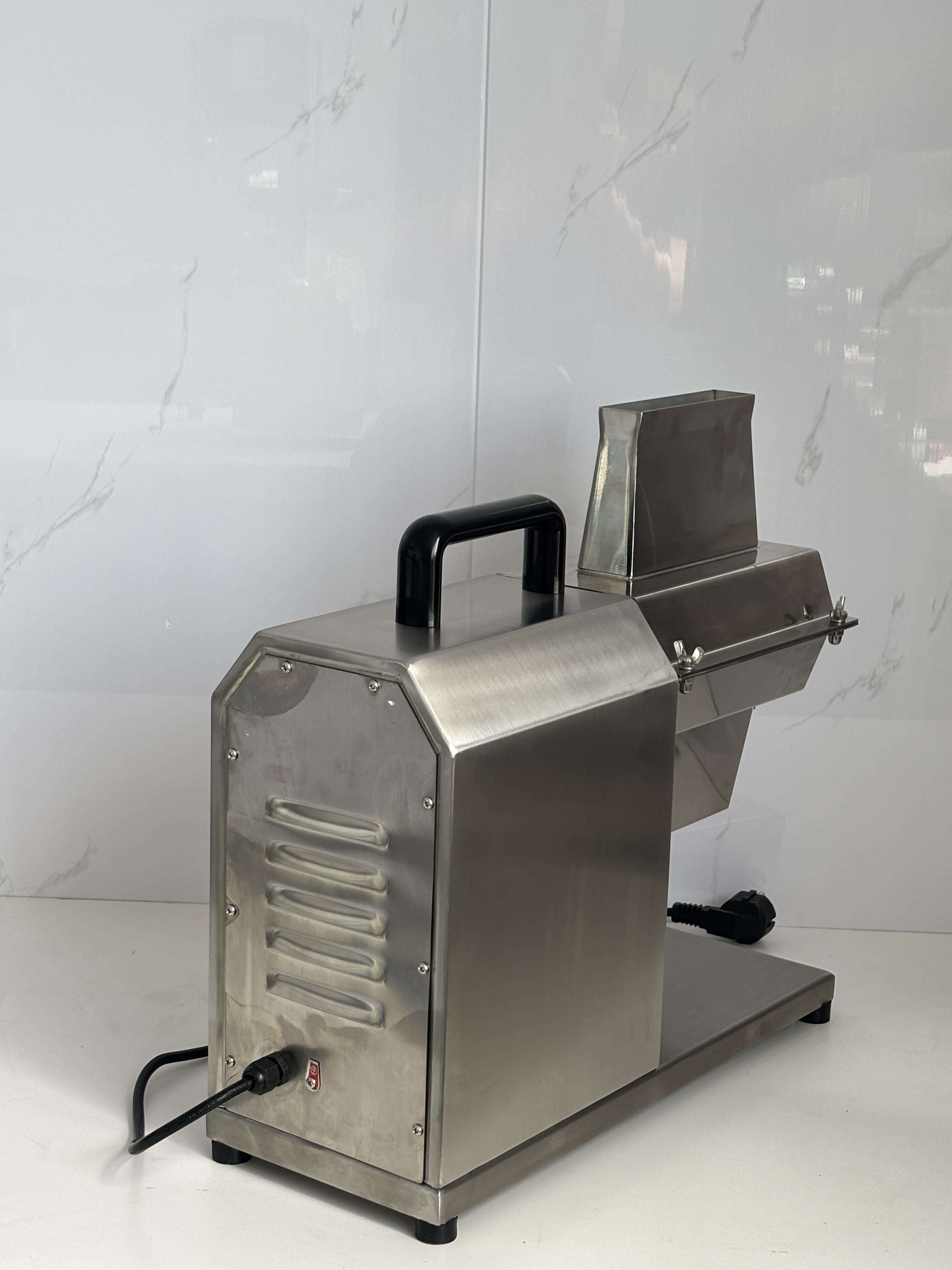
Smart Integration: How Sensor-Guided Meat Tenderizer Machines Maximize Consistency and Efficiency
Meat tenderizers guided by sensors adjust their blades based on what they see happening in real time. These machines monitor both pressure levels and how thick the meat is as it goes through, changing how deep the blades go automatically. The optical sensors basically look at how dense each piece of meat is before deciding exactly how much force needs to be applied. If they don't apply enough pressure, the collagen stays tough and the meat remains chewy. But if they go too far, the meat loses moisture and ends up smaller than expected after cooking. The system keeps track of everything continuously so all those muscle fibers get broken down consistently, no matter if the cuts are thick or thin, premium grade or standard quality. Plus, these smart systems talk to other machinery downstream too, like the portioning stations and vacuum sealers, which means less waiting around between steps and smoother operation throughout the whole processing line.
Real-time diagnostics flag calibration drift before output quality suffers, and continuous data logging supports traceability for food safety audits. Staff no longer perform manual doneness testing; instead, they redirect 15–20 minutes per shift to quality control oversight. Predictive maintenance algorithms analyze vibration patterns to anticipate wear, cutting unplanned downtime.
| Automation Feature | Consistency Impact | Efficiency Gain |
|---|---|---|
| Pressure-adaptive blades | ±3% texture variation | 22% fewer rejected batches |
| Thickness-calibrated rollers | Uniform fiber disruption | 18% faster searing readiness |
| Self-diagnosing sensors | Zero under-processed cuts | 30% reduced maintenance checks |
Cloud-connected models aggregate performance data to forecast blade replacement cycles and align production with off-peak utility rates. This operational intelligence ensures every tough cut achieves restaurant-grade tenderness–while minimizing resource expenditure and reinforcing food safety compliance.
Table of Contents
- The Physics of Mechanical Tenderization: Why Disrupted Fibers Cook Faster
- Key Meat Tenderizer Machine Specifications That Drive Cook-Time Reduction
- Real-World Impact: Commercial Braising Optimization with Meat Tenderizer Machines
- Smart Integration: How Sensor-Guided Meat Tenderizer Machines Maximize Consistency and Efficiency