
 EN
EN
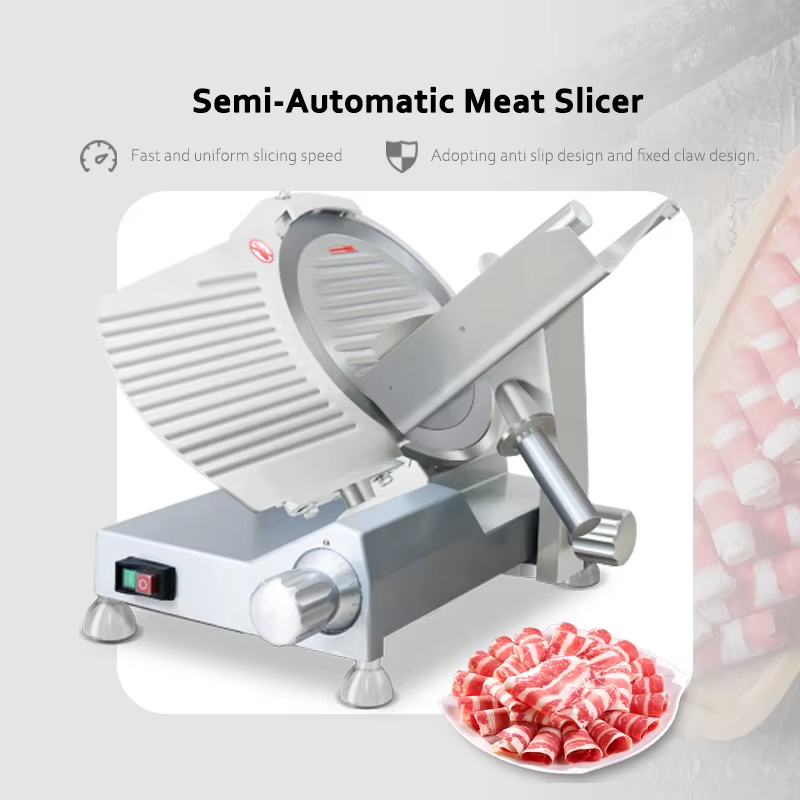
Superior Precision and Consistency with a Semi-Automatic Slicer
Motorized Feed Control Ensures Repeatable Thickness Accuracy
A semi-automatic slicer uses motorized feed control to move the product across the blade at a steady, preset speed—eliminating the variability of manual pushing. This ensures each slice achieves identical thickness, with precise adjustment from 0 to 25 mm. Whether slicing delicate cold cuts or dense roasts, operators gain uniform presentation and even cooking performance, reducing rework and elevating overall product quality. That level of repeatability is exceptionally difficult to sustain manually—especially during extended production runs.
Real-World Impact: 22% Waste Reduction in High-Volume Deli Operations
Precision directly translates to yield. Industry data shows high-volume deli operations reduce material waste by 22% compared to manual slicing when using semi-automatic equipment (Food Processing Journal, 2023). Uniform slices minimize irregular end pieces and over-portioning, maximizing usable yield from every pound of meat. For businesses processing hundreds of pounds daily, this reduction delivers measurable cost savings—making the investment both operationally and financially strategic.
Enhanced Efficiency and Productivity from a Semi-Automatic Slicer
Semi-automatic slicers transform food preparation workflows by boosting output while reducing physical strain. By automating the repetitive carriage movement, they shift the operator’s role from exerting force to loading product and monitoring quality—enabling more sustainable, scalable operations.
3.7× Higher Throughput Per Hour Compared to Manual Slicing
The motorized feed mechanism drives the core efficiency gain. Research confirms semi-automatic models achieve approximately 3.7× higher throughput per hour than manual slicing (Food Processing Journal, 2023). This isn’t just about raw speed—it’s about consistent, uninterrupted output. Unlike manual methods prone to rhythm fatigue or inconsistent pressure, motorized feed delivers stable performance across shifts and staff levels. That reliability is essential for delis, catering teams, and meal prep facilities facing tight deadlines and high-volume demands.
| Slicer Type | Average Slices Per Hour | Operator Effort Level |
|---|---|---|
| Manual | ~800 | High |
| Entry-Level Semi-Auto | ~1,600 | Moderate |
| Advanced Semi-Auto | ~3,000 | Low |
Lower Operator Fatigue and Faster Onboarding for New Staff
Automating carriage movement significantly reduces physical exertion. Operators report 67% less muscle fatigue during full shifts compared to manual slicing (Ergonomics in Foodservice, 2023). Reduced fatigue supports sustained accuracy and fewer quality deviations over time. Training also accelerates: new staff focus on machine settings and safety—not mastering hand-eye coordination and push technique—achieving proficiency 40% faster, easing integration during peak hiring periods or seasonal staffing surges.

Improved Food Safety and Hygiene with Semi-Automatic Slicers
NSF-Certified Design and Minimal Hand Contact Reduce Cross-Contamination Risk
Semi-automatic slicers strengthen food safety protocols through purpose-built, NSF-certified construction. Key features—including angled catch areas that divert meat liquids away from electronics and nonstick, easily accessible surfaces—cut bacterial growth risk by over 30% versus manual methods (NSF International, 2022). Minimal hand contact with food surfaces further lowers cross-contamination potential: operators interact only with handles and controls, not the product itself. Smooth, automated blade movement eliminates dangerous tear-and-smear incidents common with manual knives. Combined with simplified cleaning routines, these design elements make semi-automatic slicers a critical safeguard against foodborne illness in high-turnover commercial kitchens.
Optimal Balance of Control, Cost, and Capability
A semi-automatic slicer delivers the ideal compromise between manual tools and fully automated systems—offering precision, consistency, and scalability without the complexity or capital expense of full automation. It reduces labor costs and operator fatigue while preserving direct oversight of the slicing process. Operators retain control over setup and quality checks, but motorized feed guarantees repeatable thickness and throughput. For food service operations upgrading from manual methods, this balance makes semi-automatic equipment a pragmatic, high-impact investment—one that enhances productivity, reinforces food safety, and fits within a moderate equipment budget.
FAQ
What is the main advantage of a semi-automatic slicer?
The primary advantage is consistent, repeatable slicing precision achieved through motorized feed control. This ensures uniform thickness, even cooking, and professional presentation.
How much time can a semi-automatic slicer save in large-volume kitchens?
Research shows semi-automatic slicers achieve approximately 3.7× higher throughput per hour than manual slicing, significantly boosting productivity during demanding shifts.
How does a semi-automatic slicer enhance food safety?
With NSF-certified designs and minimal hand contact with food, these slicers reduce cross-contamination risks while streamlining cleaning routines, safeguarding against foodborne illnesses.
Does using a semi-automatic slicer reduce labor efforts?
Yes, it reduces physical exertion by automating repetitive movements, lowering operator fatigue, and accelerating training for new staff, making it easier to integrate into kitchen workflows.
Is a semi-automatic slicer suitable for high-volume operations?
Absolutely. With reduced waste, increased yield, and higher slicing speed, semi-automatic slicers are ideal for delis, catering teams, and meal prep facilities handling substantial meat quantities daily.
Table of Contents
- Superior Precision and Consistency with a Semi-Automatic Slicer
- Enhanced Efficiency and Productivity from a Semi-Automatic Slicer
- Improved Food Safety and Hygiene with Semi-Automatic Slicers
- Optimal Balance of Control, Cost, and Capability
-
FAQ
- What is the main advantage of a semi-automatic slicer?
- How much time can a semi-automatic slicer save in large-volume kitchens?
- How does a semi-automatic slicer enhance food safety?
- Does using a semi-automatic slicer reduce labor efforts?
- Is a semi-automatic slicer suitable for high-volume operations?