
 EN
EN

How a Juicer Series Enhances Fresh Beverage Production for Businesses
Understanding the Juicer Series: Types and Key Features
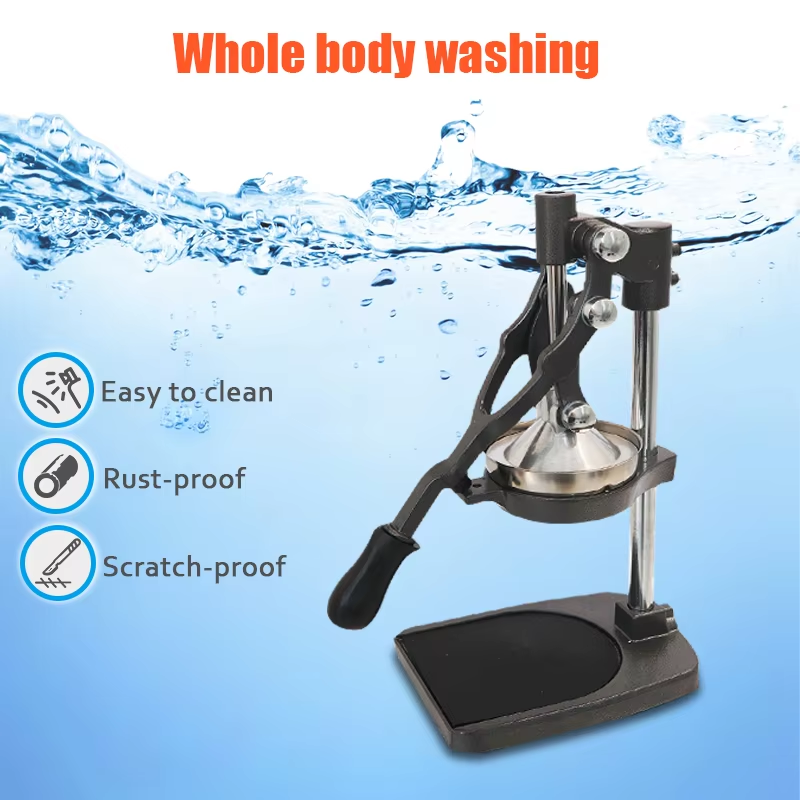
Selecting the right juicer series requires balancing processing speed, nutrient retention, and operational demands. Commercial kitchens typically choose between three systems:
Centrifugal vs. Masticating vs. Cold-Press Juicer Series
Most high volume juice operations rely on centrifugal machines that spin their blades at around 15k to 20k RPM, capable of handling about 8 to 12 pounds of fruits and veggies each hour. These work well in busy breakfast spots where speed matters most. But there's a catch worth noting from Food Tech Quarterly last year: running things this fast actually knocks down nutrients by roughly 15 to 20 percent when compared to machines that take it slow. On the other end of the spectrum we find masticating juicers working at a much gentler pace between 80 and 150 RPM. They preserve nearly all those valuable enzymes thanks to their careful crushing action, but folks need to factor in that they'll be waiting about 30% longer for results. For upscale juice bars looking to maximize what they get out of every fruit, cold press technology has become pretty much standard equipment now. These systems use two interlocking gears plus some serious hydraulic pressure to squeeze out juice yields ranging from 85 to 90 percent without generating any unwanted heat during processing.
| System | Speed (RPM) | Juice Yield | Best For |
|---|---|---|---|
| Centrifugal | 15,000–20k | 60–70% | High-volume smoothie bars |
| Masticating | 80–150 | 75–80% | Organic/health menus |
| Cold-Press | 40–100 | 85–90% | Premium retail products |
Core Components and Commercial Durability
The industrial juicer line comes with food grade 304 stainless steel augers plus ceramic bearings that last well over 15,000 operating hours before needing replacement. Cold press commercial models have a two stage filter system that keeps pulp out of the motor housing, something that causes most home juicers to break down after a while. Units certified by NSF standards cut down on maintenance expenses around 35 percent within five years when compared against uncertified machines. This happens because they resist rusting even in damp conditions where other juicers start corroding pretty quickly.
Matching Juicer Series to Business Scale and Usage
Small Cafés and Juice Bars: Compact and Efficient Models
Small juice operations that serve around 50 to 100 customers each day need something different from full blown industrial equipment. Compact centrifugal or slow masticating juicers actually work pretty well for these spaces. We've seen models that are only 18 inches wide take up about 35 percent less counter space than regular industrial units according to Food Service Equipment Journal data from last year, yet still manage to produce between 80 and 120 cups per hour. When looking at options, it's smart to go for juicer models with stainless steel strainers and automatic pulp removal features since they cut down on the hands on work needed during busy times. And speaking of busy times, a recent survey by the National Restaurant Association showed that nearly three quarters of small juice bar owners save money because their machines can be taken apart for cleaning in 15 minutes or less.
High-Volume Operations: Industrial-Grade Juicer Series
For commercial kitchens serving over 300 meals each day, investing in juicer models equipped with 2 to 3 horsepower motors and continuous feed chutes makes sense. The industrial cold press variety keeps around 95 percent of all those valuable nutrients intact compared to just 70 to 80 percent retention rate seen in regular centrifugal juicers, plus they handle about 40 pounds of fruits and veggies per hour. When looking at durability factors, check for machines with heavy duty bearings that have been put through their paces for more than 10,000 operating hours. Also important are dual speed options since different produce needs different treatment levels. Restaurants running eight hours or longer daily tend to see about half as many breakdown problems when they choose juicers with built-in thermal overload safeguards and parts that snap right back into place quickly during repairs.
Key Performance Metrics in a Commercial Juicer Series
When evaluating a commercial juicer series, three metrics directly impact profitability and customer satisfaction: juice yield, pulp consistency, and nutrient preservation. Businesses using cold-press models report 15–20% higher juice yields compared to centrifugal systems (FoodTech Research Group 2024), while maintaining up to 98% of vitamins and enzymes through low-heat extraction.
Juice Yield, Pulp Quality, and Nutrient Retention
How efficiently we get juice out of fruits and veggies really affects bottom lines since most juice bars spend around seven hundred forty bucks a week on fresh produce according to the National Restaurant Association stats from last year. Cold press machines tend to keep more nutrients because they work at a much slower pace, somewhere between forty to sixty revolutions per minute. This slower speed helps reduce oxidation which can break down those valuable vitamins over time. The texture of what's left behind after juicing matters too. Masticating juicers create pulp that's not only smoother but also drier than other methods, making it great stuff for mixing into bread recipes or tossing into compost bins instead of throwing away.
Speed, Throughput, and Downtime Management
Centrifugal juicers can handle around 3 to 5 pounds per minute which makes them great when time is tight, but they tend to produce about 30 percent more foam and sediment compared to other types. This means filters need changing quite often. On the flip side, industrial masticating juicers might only manage 1 to 2 pounds per minute, yet they keep running nonstop without stopping for breaks. Over an eight hour workday, this cuts down on downtime by nearly half. When shopping around, it's worth checking out models equipped with auto reversing augers and those that come apart easily without tools. These features really help speed things up when cleaning becomes necessary during busy periods.
Total Cost of Ownership Across Popular Juicer Series
Initial Investment vs. Long-Term Maintenance Costs
Businesses looking at juicer series tend to zero in on what's listed on the price tag first. Centrifugal models usually range from around $800 up to $2,000, whereas cold press systems start at $3,500 and beyond. But according to recent findings from the Food Service Equipment Report in 2023, ongoing maintenance actually eats up between 40 to 60 percent of all costs over five years. Take a look at replacement parts: centrifugal machines need new blades and filters costing anywhere between $200 to $400 each year. Cold press units don't wear out as fast though, so their maintenance bills typically come in lower, somewhere between $150 and $300 annually because those augers last longer before needing replacement.
Energy Efficiency and Warranty Considerations
Juicers that carry the ENERGY STAR label cut down on running expenses around 18 to maybe even 30 percent when compared against regular models according to NSF International from 2024. The cold press type machines typically draw between 200 and 350 watts during each cycle which is way below what centrifugal juicers need their 700 up to 1,200 watt range. When it comes to total cost of ownership though warranties matter too. Top end industrial juicers often come with motor guarantees lasting five years or more while cheaper options generally only last somewhere between one and three years before needing replacement parts. Looking at figures from 2024 analysis reveals companies can actually pocket about fifteen thousand dollars extra after just five years if they go for those longer warranty periods plus opt for models that don't guzzle electricity so much.
Top-Rated Juicer Series in the B2B Market: A Comparative Overview
Leading Brands and Model Recommendations by Use Case
Looking at different juicer models for business settings means matching them to what the place actually needs in terms of daily output and menu items. Small coffee shops tend to go with compact centrifugal machines since they can handle about 2 or 3 pounds of fruits and veggies each minute without taking up too much room on the counter. Big operations need something heavier duty though. Industrial grade cold press juicers with those twin gear systems really shine here, giving off around 85 percent juice yield and lasting through 10 hours straight of work every day. Restaurants focused on healthy options usually pick out masticating juicers instead. These keep about 30 percent more nutrients intact compared to regular centrifugal types, as various kitchen equipment reports from last year showed. The difference matters when serving customers who care about getting all those good vitamins and minerals.
Key differentiators across top-performing series include:
- Throughput: Cold-press models average 15–20 ounces/minute vs. centrifugal’s 25–30 ounces
- Durability: Commercial-grade stainless steel augers increase lifespan by 40% over plastic components
- Versatility: Multi-stage filtration systems handle fibrous greens and soft fruits equally well
Recent innovations feature automated pulp ejection systems and energy ratings below 800W, reducing waste and operational costs. Always verify NSF/ANSI food safety certifications when comparing commercial juicer series.