
 EN
EN
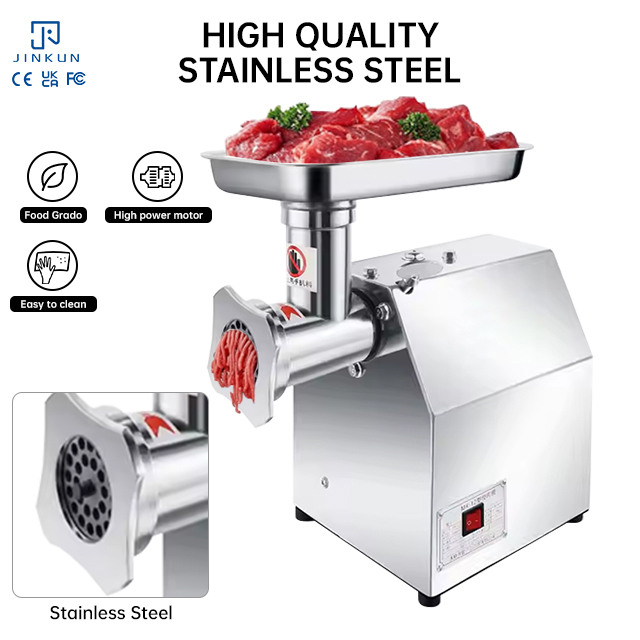
Accelerating Workflow with a Dedicated Meat Grinder
Cutting Manual Labor and Cycle Time by 40–60%
For small scale meat processors, feeding batches through grinding plates takes about 15 to 20 minutes per 50 pounds and creates a real problem in workflow. The good news is dedicated meat grinders solve this issue with their automatic hopper systems that keep things moving at a steady pace all day long. When workers don't have to handle the meat manually anymore, labor costs drop between 40 and 60 percent while everything moves faster too. This means more product gets processed each day without hiring extra hands or running overtime, something we've seen confirmed in recent industry reports from early 2023. Plus, these motorized machines just keep going strong throughout entire production shifts, so there's no slowdown when operators get tired after hours of work.
Ensuring Consistent Batch Output Across Shifts and Operators
When people grind meat by hand, there's always some variation because different folks have different techniques and things get inconsistent when shifts change. These little differences can really mess up how sausages bind together, cure properly, and end up feeling in the mouth. That's where industrial meat grinders come in handy. They've got those specially made cutting blades and grinding plates that control pressure just right, so every piece comes out the same size no matter who is running the machine. A processor somewhere in the Midwest saw their grind consistency jump to around 98% across all three shifts once they started using these machines full time. No more throwing away batches because the texture wasn't quite right. Plus, these machines make it easier to train new workers during busy seasons since anyone can operate them with just basic instructions, unlike the old manual methods that took weeks to master.
Enhancing Product Quality Through Precise Meat Grinder Control
Grind Size Uniformity and Its Critical Role in Curing, Smoking, and Sausage Binding
When particles vary in size after manual grinding, it throws off everything that comes next in processing and weakens the final product quality. During curing operations, having consistent surface area matters because salt needs to penetrate evenly and moisture must be extracted properly to hit those water activity targets and maintain shelf life stability. Smoke absorption becomes problematic too when textures aren't uniform across the batch, leading either to under processed sections or unpleasantly bitter spots where smoke has built up too much. Sausage makers know this well since proper fat distribution and effective myosin protein extraction rely heavily on consistent particle sizes throughout. Studies indicate that keeping blade speeds around 200 to 400 RPM while adjusting pressure as needed helps achieve particle consistency within about half a millimeter variance. This makes all the difference for creating stable emulsions and maintaining vacuum conditions during stuffing operations, which stops those pesky air pockets from forming and speeding up spoilage issues. Temperature control matters just as much. If grinding gets too hot, say above 12 degrees Celsius or 54 Fahrenheit, proteins start breaking down prematurely, reducing their ability to bind ingredients effectively by nearly forty percent. The latest equipment now includes built-in temperature sensors that adjust auger speeds automatically to protect these important proteins, something that directly impacts how the finished product feels in the mouth, slices cleanly, and ultimately affects overall production yields.
Maximizing ROI: Cost Efficiency of Entry-Level Industrial Meat Grinders
Getting started with industrial meat grinders pays off fast for many businesses because they turn those time consuming manual tasks into something that just works automatically again and again. For shops handling around 1000 kg per day or more, most find they get their money back in about a year and a half. The savings come mainly from needing fewer workers for grinding jobs and better product yields since the meat gets ground consistently every time. Sure, the top end machines cost more initially, but they're built with stainless steel and meet NSF standards which means less downtime for repairs and lasts anywhere between five to seven years longer than regular consumer grade equipment. Industry reports show that companies which hit these return on investment numbers tend to make smarter use of their machinery when they place grinders right next to where the mixing and stuffing happens in their production line.