
 EN
EN
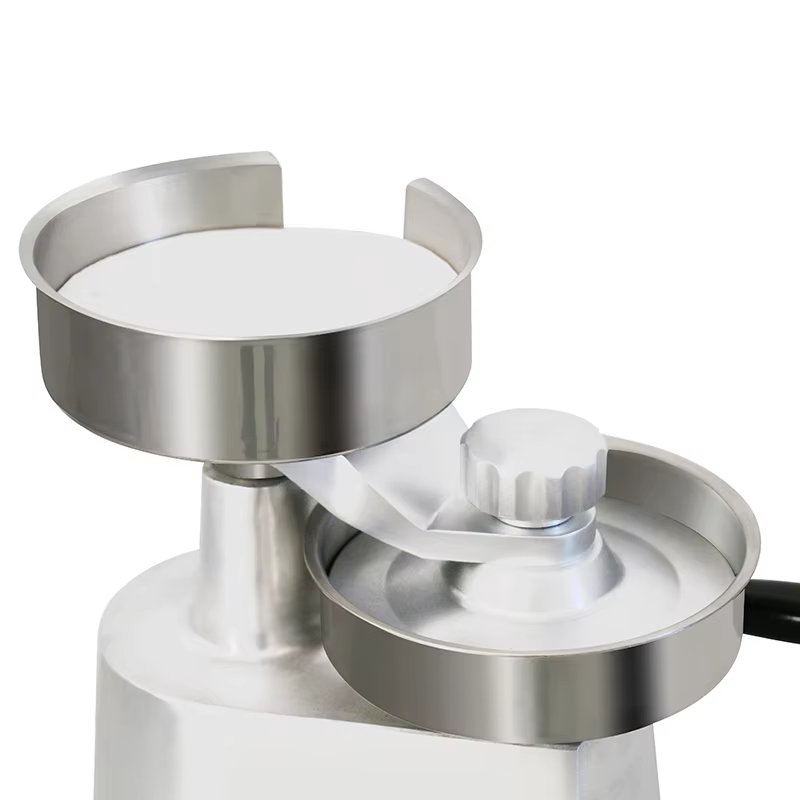
Precision Portion Control: Eliminating Over-Portioning and Trim Loss
How calibrated hamburger press settings ensure consistent patty weight and diameter
A hamburger press with finely tuned settings removes the guesswork from portioning. Operators can dial in exact weight and diameter—whether 4 oz, 6 oz, or a custom specification—ensuring every patty meets spec without over-scooping. The press compresses ground meat into a uniform disc, eliminating the common habit of adding extra meat to compensate for irregular hand-formed shapes. This precision directly targets two major waste streams: over-portioning and trim loss. Over-portioning occurs when staff add 10–15% more meat than required to “make it look right”; trim loss stems from hand-shaping, where excess material is pinched off and discarded. A calibrated press forms each patty to identical dimensions—no trimming needed, every ounce retained. The result is a batch of patties uniform in weight, thickness, and diameter, which also streamlines downstream cooking and packaging.
Data-backed impact: 12–18% reduction in ground beef waste per shift (National Restaurant Association, 2023)
The shift to consistent, press-driven portioning delivers measurable savings. A 2023 report from the National Restaurant Association found that kitchens using calibrated hamburger presses cut ground beef waste by 12–18% per shift—primarily by eliminating over-portioning and eliminating trimmings destined for the bin. In a high-volume operation processing 500 pounds of beef daily, a 15% waste reduction translates to 75 pounds saved per day, or roughly 2,250 pounds monthly. That means less raw material purchased and lower disposal fees. Critically, this isn’t a marginal efficiency tweak—it’s a core operational strategy for shrinking waste and boosting margin while preserving product integrity.
Consistent Patty Geometry: Reducing Cooking Shrinkage and Discard Rates
Uniform density and thickness minimize variability in moisture loss and deformation during grilling
A hamburger press applies controlled, repeatable pressure to shape each patty with identical density and thickness—erasing the air pockets and uneven edges inherent in hand-forming. This consistency ensures predictable heat transfer and steady moisture evaporation across the surface. As a result, pressed patties shrink more uniformly: typically 15–20% in diameter versus 25–30% for hand-formed ones, according to a 2023 operational study. That stability reduces cracking, prevents curling at the edges, and keeps patties intact on the grill—cutting re-formulations and discards. By standardizing thickness, the press also avoids dense, overcooked rims that frequently trigger rejection for visual or doneness defects.
Case study: Regional burger chain cut patty discard rate by 23% after integrating automated hamburger presses
A 2023 analysis of a 12-unit regional burger chain documented a 23% decline in patty discard rate after adopting automated hamburger presses. Prior to implementation, manual forming produced a 9.2% reject rate—driven largely by torn, shrunken, or misshapen patties deemed unserviceable. The new presses delivered ±0.5 mm thickness tolerance, stabilizing cooking behavior. Within six months, discard dropped to 7.1%, saving approximately 2,000 pounds of ground beef per location annually. Cook-time variance fell by 15%, reducing monitoring and re-grilling needs—and freeing up two hours of prep labor per shift. By removing human variability from a historically inconsistent step, the press transformed a loss-prone task into a repeatable, high-yield process.
Selecting the Right Hamburger Press for Optimal Material Yield
Comparative yield analysis: manual, hydraulic, and pneumatic hamburger presses in high-volume kitchens
In high-volume commercial kitchens, press selection directly impacts material yield and profitability. Manual, hydraulic, and pneumatic systems differ significantly in consistency, waste, and throughput—each carrying distinct trade-offs for operations scaling beyond 500 pounds of ground beef per day.
| Press Type | Patty Weight Variation | Trim Waste per Shift | Throughput (patties/hr) |
|---|---|---|---|
| Manual | ±10–18 % | 8–12 % | 200–400 |
| Hydraulic | ±2–4 % | 3–5 % | 600–900 |
| Pneumatic | ±1–3 % | 2–4 % | 800–1,200 |
Manual presses depend heavily on operator skill, often resulting in over-portioning and inconsistent diameters that increase trim loss. Hydraulic and pneumatic systems use fixed molds and calibrated pressure to deliver near-identical patties—virtually eliminating weight outliers. Pneumatic units, with faster cycling and programmable controls, achieve the tightest tolerances and lowest waste rates. While upfront cost is higher, material savings in high-volume settings often deliver full ROI within months. For operations handling over 1,000 pounds of ground beef daily, upgrading from manual to automated pressing can reduce raw material waste by more than 1,000 pounds monthly—boosting yield without recipe changes.
ROI and Operational Cost Savings from Waste Reduction
Investing in a precision hamburger press transforms waste reduction into a quantifiable financial return. The previously cited gains—12–18% less ground beef per shift (National Restaurant Association, 2023) and a 23% drop in patty discard rate—directly reduce cost of goods sold. Standardized portion size and density eliminate over-portioning, slash trimming loss, and cut labor spent correcting inconsistencies. The combined effect accelerates payback and lifts net income—without raising menu prices.
| ROI Component | Typical Impact from Waste Reduction | Operational Benefit |
|---|---|---|
| Raw Material Costs | 12–18% less ground beef per patty | Immediate bottom-line savings |
| Labor Efficiency | Up to 20% faster portioning, fewer staff for trimming | Lower labor cost per unit |
| Discard & Rework Reduction | 23% decrease in patty discard rate | Less waste handling and reprocessing |
| Production Throughput | Consistent patty geometry increases grill capacity by 10–15% | Higher output without extra line time |
| Cost of Goods Sold (COGS) | Potential 10–25% overall COGS reduction | Improved gross margins and net profitability |
When waste drops across multiple process points, cumulative impact often yields a 12–18 month payback period for mid-volume operations. Even conservative estimates—a 10% reduction in both COGS and operating expenses—can more than double return on sales, mirroring lean manufacturing outcomes across the foodservice sector. For burger-focused operators balancing quality, speed, and cost control, a precision hamburger press is not just equipment—it’s a strategic asset that converts everyday material losses into sustained margin growth.
FAQ
What is the primary benefit of using a calibrated hamburger press?
The main benefit is improved portion control, which eliminates over-portioning and trim loss, leading to significant savings in raw materials and labor efficiency.
How does a hamburger press reduce cooking shrinkage?
By ensuring uniform density and thickness, a hamburger press minimizes moisture loss and deformation during grilling, leading to consistent cooking results and reduced patty discard rates.
What are the differences between manual, hydraulic, and pneumatic presses?
Manual presses depend on operator skill and result in higher waste rates. Hydraulic presses offer better consistency, while pneumatic presses provide the tightest tolerances, fastest throughput, and the most savings in high-volume operations.
What ROI can I expect from investing in a hamburger press?
Investing in a precision press often leads to raw material savings, reduced discard rates, improved throughput, and cost savings. Typical ROI is achieved within 12–18 months of implementation.