
 EN
EN
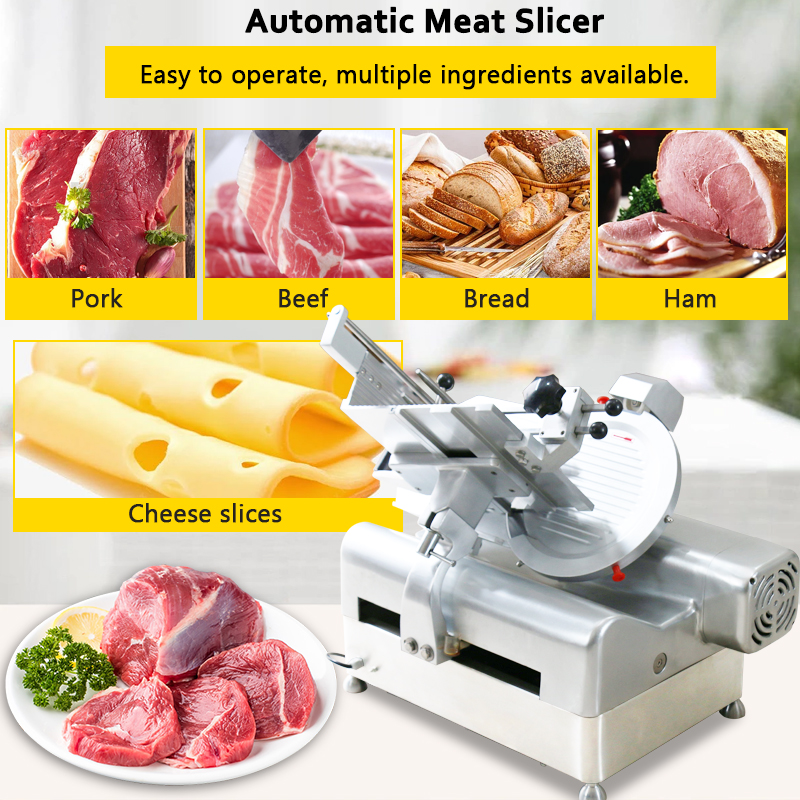
What Defines a Semi-Automatic Slicer: Core Functionality and Value Positioning
Semi automatic slicers sit somewhere between doing things by hand and going all out with automation. They mix what operators do themselves with blades that are powered by motors. The combination gives pretty good control over how thin slices get made without wearing workers out so much. That's really important when someone has to slice hundreds of items every day. These machines aren't like their fully automatic cousins that just run on their own once set up. Instead they focus more on being able to change settings as needed. Workers can tweak things like how thick each slice comes out, how hard the blade presses down, and how fast stuff moves through the machine. This makes them great for cutting different kinds of food products ranging from cold cuts to specialty cheeses where consistency matters but flexibility is also key.
Mechanical operation vs. automation: Understanding the manual feed + powered blade paradigm
- Operator-driven positioning: Staff manually control product placement and advancement against the blade
- Motorized slicing: Electrically powered blades ensure consistent rotation speed and cutting force
- Adjustable parameters: Users set thickness gauges and blade speeds per product requirements
- Safety-centric design: Features like hand guards and automatic blade brakes mitigate injury risks
Target use cases: Delis, butcher shops, and foodservice kitchens with 50–150 daily servings
This equipment excels in mid-volume operations where flexibility outweighs the need for fully automated throughput. Ideal scenarios include:
- Neighborhood delis slicing specialty meats and cheeses to order
- Butcher shops processing custom cuts for retail display
- Cafeteria kitchens preparing daily sandwich stations and charcuterie boards
Operations exceeding 150 servings daily often benefit from upgrading to fully automatic systems, while sub-50 serving venues typically utilize manual slicers.
Performance-Affordability Trade-Offs in Semi-Automatic Slicer Design
Structural compromises: Simplified carriage systems, non-integrated sharpening, and material selection
When manufacturers think about what goes into their products, they often have to weigh price against how long something will last. Take those simplified carriage systems for instance. They cut down on moving parts which saves money during manufacturing, though operators end up needing to move things manually instead. The same goes for sharpening mechanisms that aren't built in. Restaurants save anywhere from 15 to maybe even 25 percent initially when they skip out on automatic sharpening features. Some companies also swap out stainless steel for food grade plastics in areas that don't need constant contact. This makes equipment lighter and helps prevent rust issues over time. All these compromises make sense for smaller operations that handle between fifty and a hundred and fifty meals each day. For them, getting tools that work well enough without breaking the bank matters more than having equipment that could survive a nuclear winter.
Throughput realism: Consistent 80–120 slices/minute without operator fatigue or quality loss
The ergonomic design helps overcome the limits of manual labor, allowing consistent slicing rates between 80 to 120 portions per minute. This matches what most operations need for mid-volume production without sacrificing slice uniformity. The angled feed tray works well with the counterbalanced blade system, so operators can maintain good output quality through those long 4 to 6 hour shifts before fatigue starts affecting results. Even though there's less vibration damping than in top-of-the-line models, the machine still keeps slices within about 0.3mm thickness variation at maximum speed. Non-slip base plates are another smart touch that stops the unit from shifting around when running continuously all day. And speaking of reliability, the mechanical safety locks actually work better in practice than those fancy sensor systems, cutting down on unexpected stoppages that waste time and disrupt workflow.
The optimal semi-automatic slicer achieves this balance through purpose-driven compromises—avoiding the 30–40% cost premium of full automation where unjustified by volume needs.
Total Cost of Ownership: Labor Efficiency and Reliability Beyond Upfront Price
Labor impact: Reduced training time and lower skill barrier vs. fully automatic slicers
Most semi automatic slicers don't need much technical know how at all. Usually someone can get the hang of basic operations within about two hours max. Fully automated models tell another story though they often come with complicated programming requirements that most staff just aren't equipped to handle. Deli owners and butchers especially appreciate these simpler machines because their shops tend to have high staff turnover rates around 30 percent per year according to the National Restaurant Association from last year. When kitchens ditch those fancy automated systems, they still end up getting good quality slices consistently without spending money on expensive tech training programs for new hires.
Reliability in practice: 18–24 month average blade lifespan and minimal downtime in commercial settings
Semi automatic blades that get regular maintenance typically last between 18 to 24 months in places with moderate volume operations around 150 meals served each day. These models have about 40 percent fewer moving components compared to their fully automatic counterparts which means there's just not as many things that can break down. According to field reports, facilities that keep their blades sharp every two weeks experience under 5% downtime per year. That makes a huge difference for restaurants and cafeterias since losing even an hour of operation costs upwards of seven hundred forty dollars according to research from Ponemon back in 2023. Sure, these machines don't come with built in sharpening systems so staff needs to handle that manually, but this actually works out better because it stops motors from getting overloaded during busy times when automated versions often shut down completely.
Why Semi-Automatic Slicers Outperform Fully Automatic Options for Low-to-Mid Volume Operations
Kitchens that handle around 50 to 150 meals each day often find semi automatic slicers offer better bang for buck when it comes to running costs and getting things done quickly. The big ticket automatic models cost anywhere from $15k up to $40k initially and need lots of maintenance work down the line. Semi auto versions save about half the money upfront while still doing most of what's needed. With their manual feeding mechanism, these machines can switch between different foods on the spot whether it's fancy cured meats or hard cheeses without needing time consuming software changes that happen with full automation. This kind of flexibility matters a lot for places whose menus change regularly throughout the seasons. According to some industry reports, blades last roughly 18 to 24 months if kept clean and maintained properly, so there isn't much downtime to worry about. Staff pick up how to operate them within just 30 minutes compared to spending several hours learning automated systems, which keeps operations moving smoothly during busy periods. Looking at total costs over five years shows semi automatic options stay about 20 to 30 percent cheaper for businesses operating at moderate volumes, making them smart equipment choices for restaurants aiming to grow sustainably without breaking the bank.
Table of Contents
- What Defines a Semi-Automatic Slicer: Core Functionality and Value Positioning
- Performance-Affordability Trade-Offs in Semi-Automatic Slicer Design
- Total Cost of Ownership: Labor Efficiency and Reliability Beyond Upfront Price
- Why Semi-Automatic Slicers Outperform Fully Automatic Options for Low-to-Mid Volume Operations