
 EN
EN
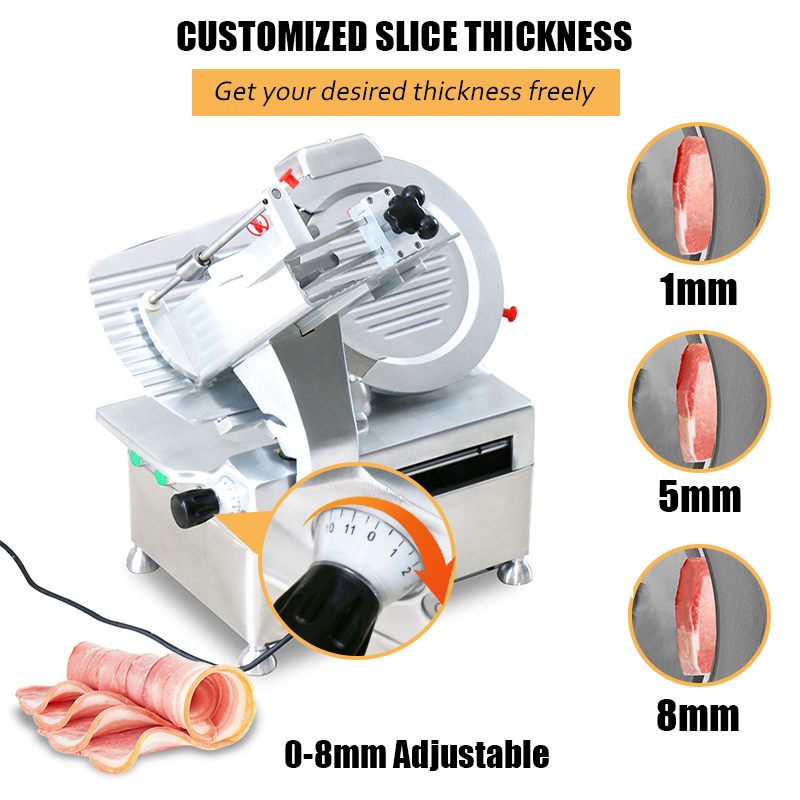
Precision Slicing and Portion Consistency Directly Reduce Food Costs
How ±0.5mm slice thickness control increases yield per pound of meat
Commercial grade slicers that hit around half a millimeter thickness tolerance get the most out of each primal cut. They cut down on those weird shaped ends that usually just end up tossed away, and can actually squeeze out two to four additional servings from every single cut. When dealing with fancy meats such as prosciutto or smoked brisket, getting consistent slices makes all the difference for sandwich coverage and looks great on charcuterie boards too, which cuts down on what each serving costs. According to some USDA FSIS numbers we've seen, if the slice thickness goes off track by even one millimeter or more, trim losses jump around 7 percent. That means restaurants doing big volume business could be throwing away between eighteen and twenty seven dollars worth of meat every week because their slicing isn't quite right.
Why 'faster slicing' often sacrifices accuracy—and inflates food cost
When slicing at high speeds without proper calibration, we often end up with thickness differences over 2mm in about a third of all cuts. Staff then have to throw away slices that don't reach weight requirements or compensate by adding more meat, which ends up costing between 9% and 14% extra on food expenses. Workers who focus too much on speed instead of getting accurate measurements tend to spend around 22% more per week on meat compared to teams working with properly calibrated machines. While fast slicing does save some labor time initially, it usually doesn't make up for the wasted product since fixing those inconsistent cuts takes roughly 15% longer during preparation.
On-Demand Slicing Minimizes Waste and Extends Product Shelf Life
18–22% spoilage reduction: Pre-sliced vs. whole-cut + meat slicer models
Studies show that when restaurants slice meats just before serving instead of keeping them pre-sliced, they actually cut down on waste by about 18 to maybe even 22 percent. The reason? Whole pieces of meat have natural barriers that keep bacteria at bay. When we wait until right before service to slice, there's less exposure to air which means slower oxidation happens. Plus, the meat doesn't dry out as quickly. This simple change can make those cuts last two or three extra days on average before they need to go, and guess what? That translates into real savings for restaurant owners dealing with food waste costs all the time.

Cold chain integrity preserved through just-in-time meat slicer use
Repeated refrigeration cycling of pre-sliced products accelerates temperature fluctuations that degrade texture and safety. On-demand slicing maintains consistent cold chain integrity by limiting product handling to point-of-use. Just-in-time processing reduces exposure to ambient temperatures by 70%, preserving freshness and supporting compliance with HACCP standards.
Commercial Meat Slicer ROI: Measuring Tangible Long-Term Savings
Investing in commercial-grade meat slicers generates quantifiable financial returns through three core savings dimensions: ingredient yield optimization, labor efficiency, and waste reduction. Operators achieve full equipment cost recovery within 8–14 months by converting these variables into measurable metrics.
Break-even in 8–14 months: Volume, labor, and waste savings analysis
The accelerated payback period stems from interconnected operational improvements:
-
Volume efficiency
Precision slicing increases usable yield per pound of meat by minimizing irregular cuts that compromise portion control -
Labor productivity
High-speed automation reduces manual slicing time by 30–50%, reallocating staff to revenue-generating tasks -
Waste containment
On-demand processing prevents spoilage of pre-sliced inventory, directly lowering disposal costs
These cumulative savings typically offset equipment expenses within the first year, with high-volume operations reaching break-even fastest. Continuous monitoring of slice accuracy, throughput rates, and trim waste provides actionable data to maximize lifetime ROI.
Maintenance and Blade Sharpness: Hidden Yield Levers in Meat Slicer Performance
USDA-FSIS data: Dull blades increase trim loss by up to 7%
When meat slicer blades get dull, operators end up pushing harder than they should, which leads to all sorts of problems. The cuts come out uneven with those annoying jagged edges that nobody wants to deal with later. According to USDA-FSIS studies, these issues actually create about 7% more trim waste compared to when blades are properly maintained. That's roughly losing almost a full pound from every 15 pounds processed. Keeping blades sharp through regular professional sharpening makes a big difference. Not only does it maintain clean cuts, but it also means less wear and tear on the machine itself while getting more life out of each blade. Meat processors who start checking blade sharpness daily and schedule proper honing sessions tend to see their meat costs drop between 11% and 14% over just six months. Investing time in blade maintenance isn't just another chore on the list it becomes something that directly impacts bottom line numbers and product quality.