
 EN
EN
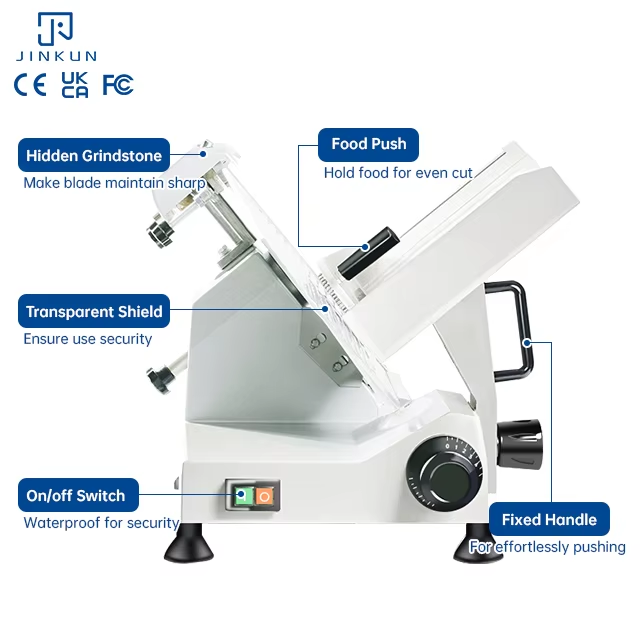
The High-Cost Training Bottleneck in Modern Kitchens
Training new kitchen staff on traditional manual slicers is a costly and time-consuming process. Operators must master complex blade configurations, manual thickness adjustments, and rigorous safety protocols—skills that often require a full week of hands-on practice. During this period, production slows significantly, and inconsistent cutting leads to wasted ingredients, driving up food costs. Industry data indicates that each new hire can cost a kitchen over $1,000 in lost productivity and material waste before achieving acceptable speed and consistency. With annual staff turnover exceeding 60% in many commercial kitchens, these training expenses recur constantly, straining operational budgets. Inadequate training also increases the risk of slicer-related injuries—raising insurance premiums and liability exposure—while diverting kitchen managers from critical oversight duties. This persistent bottleneck limits scalability, menu agility, and quality control. A semi-automatic slicer breaks this cycle by simplifying operation, reducing onboarding from days to hours.
How Semi-Automatic Slicers Cut Onboarding Time by Design
Removable Blades and One-Touch Thickness Controls Reduce Cognitive Load
New staff often struggle with the mechanical complexity of traditional slicers—adjusting dials, calibrating blades, and managing variable feed speeds. Semi-automatic slicers eliminate much of this cognitive load: tool-free blade removal enables safe, intuitive maintenance, while one-touch thickness controls replace multi-step calibration with a single, precise setting. Trainees produce consistent, repeatable slices within their first shift—not after days of trial and error. This streamlined interface lowers the mental barrier to competence, minimizing early errors and accelerating skill retention. Research shows such simplified controls can reduce initial training time by up to 40% compared to fully automatic models—getting new hires to full productivity faster.
Standardized Operation Enables Consistent, Repeatable Training Modules
Semi-automatic slicers operate with fixed, non-programmable settings—no variable speeds, no custom presets, no software interfaces. That means trainers deliver one standardized procedure for loading, slicing, and cleaning across all shifts and staff levels. Safety protocols are equally unified: a single emergency stop location, one blade-change sequence, and consistent guarding logic. This uniformity removes ambiguity from instruction, ensuring every trainee learns the same correct technique—and masters it more quickly. Managers gain measurable benchmarks for progress, shortening the path from orientation to independent workstation operation.
Safety, Consistency, and Confidence: Outcomes of Adopting a Semi-Automatic Slicer
68% Drop in Slicer-Related Incidents Post-Transition (NSF 2023)
According to NSF International’s 2023 industry benchmark report, kitchens that transitioned to semi-automatic slicers saw a 68% reduction in slicer-related incidents. Built-in safeguards—including auto-braking upon resistance detection, tactile emergency stops, and full perimeter blade guarding—meet NSF/ANSI 8 standards and actively mitigate human-error risks. Unlike manual slicers, where safety depends entirely on vigilance and experience, semi-automatic models intervene physically when hazards arise. This engineered protection reduces liability, minimizes worker downtime, and makes onboarding safer and more scalable—even for entry-level teams.
Uniform Slice Quality Reduces Waste and Improves Customer Expectations
Semi-automatic slicers deliver precise, repeatable slice thickness and weight—eliminating the variability inherent in manual operation. When portion size is predictable, over-portioning waste drops sharply, often by 15–20% within the first month. Customers receive identical product across orders, reinforcing brand trust and encouraging repeat business. For training, this consistency is transformative: new hires learn standard slicing patterns faster because the machine enforces outcomes—not guesswork—reducing both waste and procedural errors from day one.
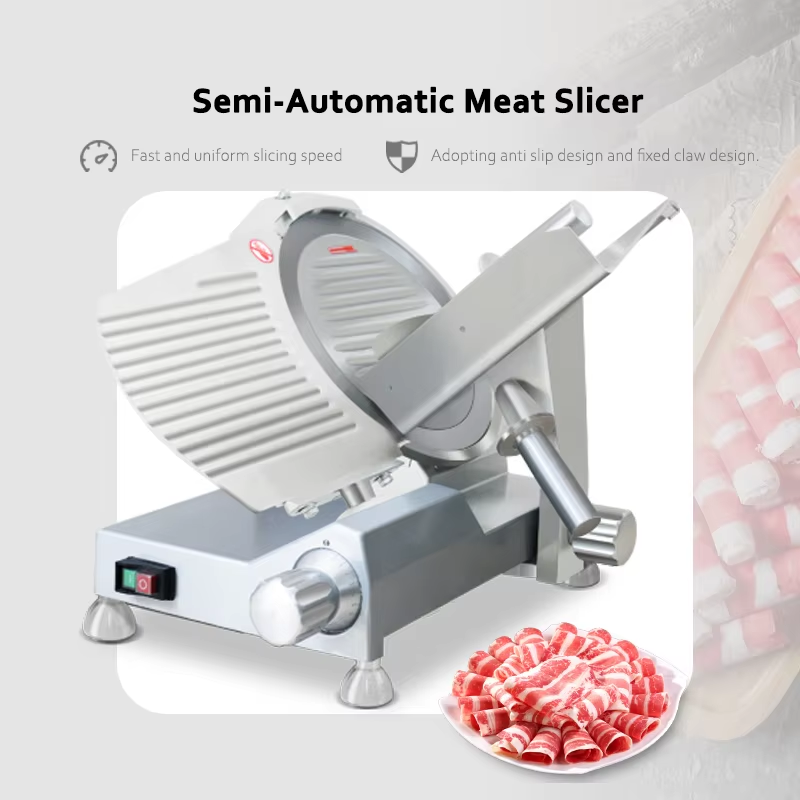
Selecting the Right Semi-Automatic Slicer for Scalable Staff Training
A semi-automatic slicer designed for rapid proficiency helps standardize training across shifts and accelerates time-to-competency. Prioritize models built around operator simplicity—not just automation.
Key Features That Accelerate Proficiency: Auto-Stop, Tool-Free Disassembly, and Visual Calibration Aids
Auto-stop mechanisms halt slicing instantly upon detecting resistance or overfeed—preventing blade damage and eliminating the need for constant supervision. Tool-free disassembly allows quick, safe cleaning without specialized tools or technical knowledge, reducing anxiety around maintenance. Visual calibration aids—such as clearly marked, indexed thickness dials—let staff set accurate slice dimensions confidently on the first try. Together, these features compress learning curves, build early confidence, and support consistent, scalable onboarding.