
 EN
EN
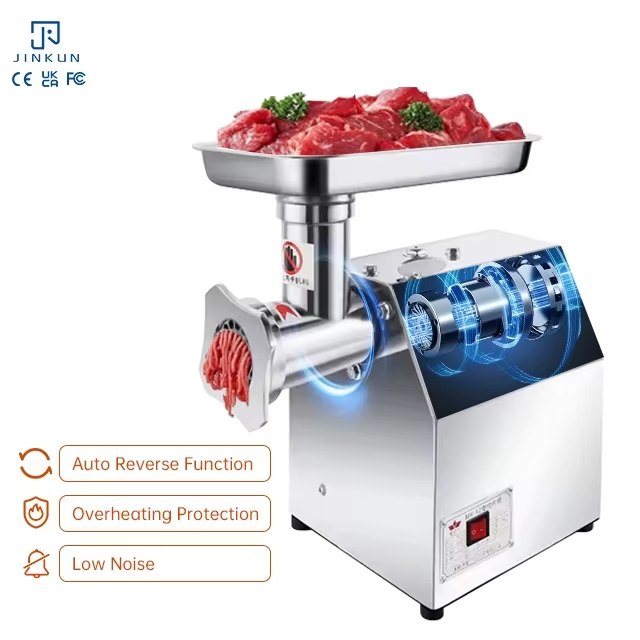
Time and Labor Efficiency for High-Volume Meal Prep
In high-volume meal prep, every second saved in the kitchen translates directly to operational profitability. Cruise ship galleys routinely serve 30,000 meals per voyage, while convention hotels may plate 4,000 covers in a single 12-hour window. At this scale, a meat tenderizer machine becomes a strategic asset—slashing manual labor, stabilizing throughput, and supporting consistent quality across thousands of servings.
Reducing Manual Tenderizing Labor by Up to 70% in Commercial Kitchens
Manual tenderizing with a mallet or hand-crank tool relies on repetitive motion, leading quickly to worker fatigue and inconsistent results. Automated meat tenderizer machines replace that labor-intensive step with a hands-off, high-speed operation. According to a 2023 equipment productivity study by Foodservice Equipment & Supplies, shifting from manual to automated tenderizing can cut direct labor time by as much as 70%. A mid-sized commissary kitchen adopting the technology observed the following impact:
| Metric | Manual Method | Automated Meat Tenderizer Machine |
|---|---|---|
| Avg. lbs processed per hour | 45 | 160 |
| Full-time employees assigned to tenderizing | 2 | 0.6 (1 shared role) |
| Consistency complaints per shift | 8 | 1 |
The machine’s steady, uniform blade action eliminates human variability—enabling one operator to oversee multiple units while sustaining high output. That labor reallocation frees skilled staff for value-added tasks like marination or portioning, without adding headcount.
Electric vs. Hand-Crank Meat Tenderizer Machine Throughput in Production Environments
Choosing between electric and hand-crank models hinges on balancing initial investment against continuous throughput demand. For facilities processing over 1,000 pounds of protein daily, electric tenderizers deliver rapid ROI—not just through speed, but through consistency and yield preservation.
| Variable | Electric Models | Hand-Crank Models |
|---|---|---|
| Typical throughput | 300–500 lb/h | 50–80 lb/h |
| Labor requirement per 200 lb batch | 0.4 operator-hours | 2.5 operator-hours |
| Meat thickness consistency | ±0.5 mm | ±2 mm |
| Fatigue-related slowdown | None | Observable after 2 h of continuous use |
One institutional catering service reported a 40% reduction in prep-line labor costs within six months of replacing hand-crank units with electric tandem systems. The precise, repeatable blade depth also prevents over-tenderizing—a common cause of texture loss and increased trim waste—preserving product yield across every shift. Because throughput directly tracks machine choice, selecting the right tenderizer eliminates a hidden bottleneck and aligns tenderizing speed with downstream mixers and packaging lines.
Consistent Tenderness and Portion Control Across Batches
In high-volume meal prep, customer loyalty depends on delivering the same eating experience with every serving. Achieving that uniformity across thousands of pre-portioned meals requires more than skilled knife work—it demands programmable precision. Meat tenderizer machines address both texture consistency and raw material efficiency by replacing manual variability with controlled mechanical action.
Precision Blade Depth Control for Reproducible Texture in Pre-Portioned Meals
Meat tenderizer machines feature adjustable blade assemblies calibrated to fixed cutting depths—often down to the millimeter. Once set, every piece of protein receives identical perforation count and penetration depth, severing connective tissue without compromising structural integrity. This eliminates the over- or under-tenderizing common with manual methods, where fatigue or inconsistent strokes create texture variances. For meal prep services packaging standardized portions—like 6-ounce chicken breasts or 8-ounce steaks—the result is even cooking and uniform tenderness at the bite level. Automated depth control also enables rapid switchovers between protein types without recalibration errors, supporting multi-SKU production on a single line. Safety interlocks prevent blades from exceeding the preset depth, protecting both operators and high-value cuts. By making tenderness a repeatable variable—not a craft-dependent outcome—providers build the consistency that drives subscription retention and brand trust.
Minimizing Trim Waste and Maximizing Yield with Uniform Meat Tenderizer Machine Processing
Manual tenderizing often pulverizes thin edges or creates ragged surfaces that require trimming before portioning—driving up raw material costs. In contrast, a meat tenderizer machine applies uniform pressure across the entire surface, yielding clean, intact edges that need little to no corrective cutting. This directly boosts usable meat yield, a critical metric where ingredient costs dominate margins. Blades set to optimal depth sever tough collagen without mashing muscle fibers, helping protein retain natural shape and moisture during cooking. The reduction in off-cut waste is immediate and measurable: less trim means fewer pounds purchased per finished meal, improving per-unit profitability. Uniform thickness also streamlines downstream steps—like marination and packaging—since each portion behaves identically. In batch-heavy environments, this consistency transforms raw protein into a reliable, scalable input that helps meal prep services hit cost targets while delivering the plate presentation and mouthfeel customers expect.
Enhanced Flavor Delivery and Marinade Absorption
How Meat Tenderizer Machines Improve Marinade Penetration and Flavor Uniformity
Meat tenderizer machines create a network of micro-channels in muscle fibers, increasing surface area available for liquid absorption. This mechanical action allows marinades to penetrate deep into the meat—not just coat its surface. Research indicates this process accelerates flavor uptake by as much as 40% compared to untreated cuts. The even distribution of spices and seasonings throughout the tissue ensures every bite tastes uniformly seasoned. For meal kits and pre-cooked proteins, that means robust, consistent taste profiles upon delivery. Beyond flavor, improved marinade absorption helps retain moisture during cooking, resulting in juicier, more tender final dishes. The technology removes the guesswork of manual marinating, delivering reliable results regardless of volume. By transforming how flavors integrate with protein, a meat tenderizer machine becomes an essential asset for high-quality, scalable food preparation.
Scalable Integration into Automated Meal Prep Workflows
As meal prep services scale production, embedding a meat tenderizer machine into automated workflows becomes a strategic advantage. Modern units are engineered with programmable logic controllers (PLCs) and standardized interfaces, enabling direct communication with upstream portioning saws and downstream marinating or packaging lines. This seamless integration eliminates manual transfer steps—the tenderizing stage becomes a synchronized, hands-off process maintaining steady throughput of 2,000–4,000 lbs per hour in high-volume facilities. Modular design allows operators to add tenderizing modules in parallel as order volumes grow—without overhauling existing conveyor layouts. Infeed and outfeed heights can be matched to surrounding equipment, while recipe-driven adjustments—such as blade depth, roller speed, and direction—are stored in central production software. That ensures consistent texture across every batch, without operator intervention. By removing a labor-intensive bottleneck and replacing it with a scalable, data-driven step, services can meet demand spikes without sacrificing food quality, traceability, or operational efficiency.
FAQ Section
What is the primary benefit of using a meat tenderizer machine?
The main advantage of using a meat tenderizer machine is the significant reduction in manual labor and improved consistency in texture and portion control, which translates into operational profitability for high-volume meal prep environments.
How does an electric meat tenderizer compare to a hand-crank model?
Electric meat tenderizers offer higher throughput, better meat thickness consistency, and reduced labor fatigue compared to hand-crank models. They are ideal for facilities processing over 1,000 pounds of protein daily.
Can meat tenderizer machines enhance marinade absorption?
Yes, meat tenderizer machines create micro-channels in meat fibers, increasing surface area for liquid absorption and improving flavor uniformity and moisture retention during cooking.
Are meat tenderizer machines suitable for scaling operations?
Absolutely. Modern units with programmable logic controllers (PLCs) easily integrate into automated workflows, allowing for seamless scaling of production without compromising quality or efficiency.