
 EN
EN
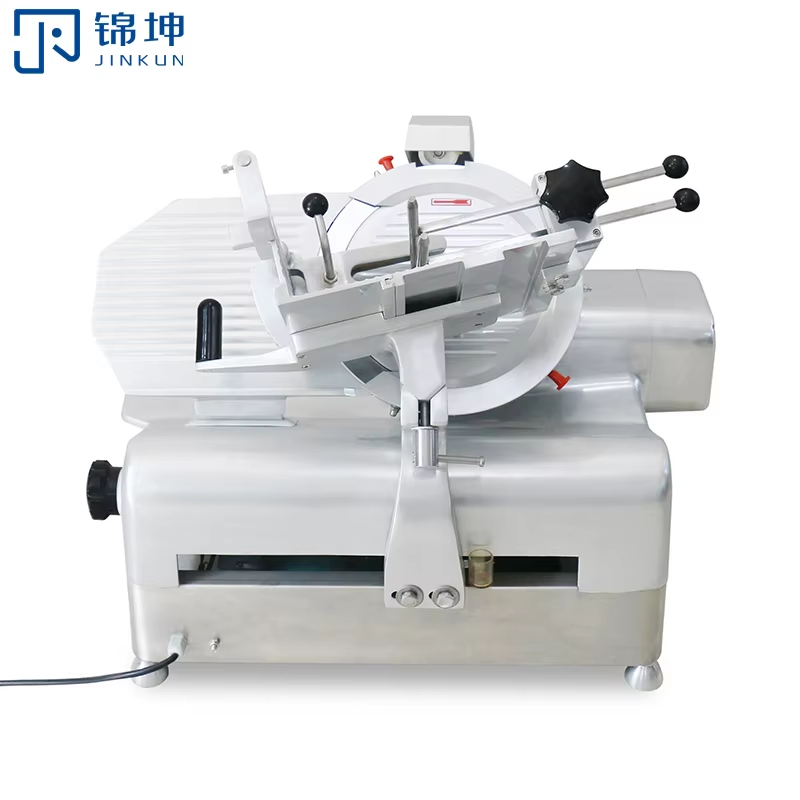
Understanding Large-Scale Catering Volume Requirements
Defining 'Large-Scale Catering' by Daily Throughput Benchmarks
Large-scale catering operations serve 500+ meals daily or manage events with 300 guests per service. The defining metric is daily throughput—the total pounds of food processed—often exceeding 1,000 lbs for meat and deli items alone. High-volume kitchens routinely produce over 200 covers per shift, driving consistent slicing demand for roast beef, ham, and cheese. For automatic slicers, sustained output—not peak bursts—is critical: machines must avoid overheating and minimize blade changes across extended service windows.
Throughput benchmarks must reflect peak demand, not averages. A caterer may process 1,200 lbs of deli meats on a busy day—requiring an automatic slicer rated for continuous operation. Operators use slices-per-pound ratios to translate volume into actionable output targets: 250 lbs of roast beef at 20 slices per pound equals 5,000 slices. While a slicer rated at 60 slices per minute (SPM) could theoretically complete this in 83 minutes, real-world duty cycles—including loading, cleaning, and adjustments—reduce effective output by 20–30%. This analysis ensures the slicer investment aligns precisely with operational reality—not theoretical specs.
Translating Menu Volume into Automatic Slicer Output Needs
Menu volume directly determines slicing requirements. A banquet menu serving sliced brisket to 400 guests—assuming 2.5 slices per guest—requires roughly 1,000 precise, uniform slices. An automatic slicer must deliver those within the available prep window, accounting for inevitable workflow interruptions. Though slicers are marketed by rated SPM, actual output rarely exceeds 80% of that figure due to product loading, blade maintenance, and thickness recalibration.
If a kitchen needs 6,000 slices in two hours, it requires at least 50 SPM of realized output—pointing to a unit rated at 60–65 SPM. Blade diameter also matters: 13–15 inch blades significantly improve throughput for large-format proteins like prime rib or 10-lb cheese blocks, reducing repositioning and cutting time by up to 30% versus smaller models. Translating menu volume into slicer output needs prevents both costly over-specification and performance-limiting under-sizing—ensuring quality, safety, and schedule adherence during peak service.
Key Capacity Metrics for Heavy-Duty Automatic Slicers
Slices Per Minute vs. Real-World Duty Cycle: Why Rated RPM Is Insufficient
A common selection error is conflating blade revolutions per minute (RPM) with usable slicing output. A slicer rated at 350 RPM may deliver only 50–60 effective slices per minute once loading, carriage return, and thickness adjustment are factored in. Far more meaningful is the real-world duty cycle: the percentage of time the machine can operate continuously without risking motor overheat. In large-scale catering, where throughput often exceeds 200 lbs/hour, slicers must sustain >80% duty cycles—or face disruptive cooldown pauses.
The decisive metric is sustained throughput: the number of consistent, thickness-accurate slices delivered over 60 minutes—not momentary burst speed. When evaluating capacity, request the manufacturer’s verified 100% duty cycle slice count—not peak RPM. That shift in focus prevents bottlenecks during high-volume service windows and avoids costly mid-shift failures.
Motor Power, Blade Diameter (13–15 Inch), and Thermal Design for Continuous Operation
Heavy-duty automatic slicers built for round-the-clock use combine a ½–¾ horsepower motor with a 13–15 inch blade. Larger blades do more than cut bigger items: they reduce product resets per batch and enable deeper, cleaner cuts without straining the motor. A 15-inch blade can slice a full 10-lb cheese block or prime rib roast in one pass—cutting portioning time by nearly 30% compared to a 12-inch model.
But motor power alone is meaningless without thermal resilience. Look for fully enclosed, permanently lubricated motors with automatic thermal overload protection and cooling fans rated for continuous service. Independent equipment testing labs cite 6+ hour uninterrupted operation as the minimum threshold for large-scale catering reliability—and only units with integrated thermal management consistently meet it. Prioritizing these three interdependent features—power, blade size, and heat dissipation—ensures dependable daily throughput without premature wear or unplanned downtime.
Selecting the Right Automatic Slicer Capacity: A Step-by-Step Framework
Matching Daily Processing Volume to Slicer Duty Ratings (80% vs. 100% Load)
Selecting an automatic slicer based solely on peak output ratings is a critical oversight. Industrial units are engineered to sustain 80% load reliably—not 100%. Running at full duty cycle triggers thermal cutoffs, accelerates wear, and shortens motor life. A 2023 endurance study of commercial kitchen equipment found slicers operated continuously at 100% duty experienced 40% more motor failures within two years.
To determine your true requirement, multiply total daily pounds to be sliced by a 1.25 safety factor—then divide by the slicer’s verified SPM output at 80% load. For example, a caterer processing 800 lbs of meat daily should select a machine capable of delivering at least 2,400 accurate slices per hour—even after accounting for loading, cleaning, and brief cooldown intervals. This margin safeguards against thermal failure during peak service and preserves long-term reliability.
Case Validation: How a 500-Person Wedding Caterer Chose an Industrial Automatic Slicer for 1,200+ lbs/Day
A wedding caterer serving 500 guests faced daily throughput exceeding 1,200 lbs of proteins, cheeses, and vegetables. Their semi-automatic unit struggled: inconsistent slice thickness, operator fatigue from constant attention, and thermal shutdown after just two hours. After calculating required output—3,000 accurate slices per hour, sustained across 8-hour shifts—they selected a heavy-duty industrial automatic slicer with a 14-inch blade, fully enclosed continuous-duty motor, and integrated cooling system.
The new unit maintained ±0.5 mm slice consistency across diverse products—from delicate prosciutto to frozen beef blocks—without degradation. Labor costs per pound dropped by 30%, and waste from uneven slicing fell by 15%. This case confirms that for high-volume catering, investing in an automatic slicer with a validated 80% duty rating delivers stronger ROI than pushing lower-capacity units beyond their design limits.
Frequently Asked Questions (FAQs)
What is considered large-scale catering?
Large-scale catering involves serving 500+ meals daily or hosting events with 300+ guests per service. The focus lies on significant daily food throughput, often exceeding 1,000 lbs of processed ingredients.
What key factors should I consider when choosing an automatic slicer?
Focus on motor power, blade diameter, thermal protection, duty ratings, and real-world slicing capacity (slices per minute realized output). Avoid selecting a slicer based solely on peak RPM rate.
How can I calculate the required capacity for an automatic slicer?
Determine your daily slicing needs (in pounds), add a safety margin (multiply by 1.25), and match this to a slicer’s effective slices per minute at 80% load to find the right unit.
Why does blade diameter matter?
Blade diameter impacts slicing efficiency and consistency. Larger blades (13–15 inches) handle larger products, reduce repositioning time, and improve throughput compared to smaller blades.
What is a real-world duty cycle, and why is it important?
A real-world duty cycle is the percentage of time a slicer can work continuously without overheating. Machines for high-volume catering require at least 80% duty cycles to handle large outputs without frequent cooldowns or motor damage.