
 EN
EN
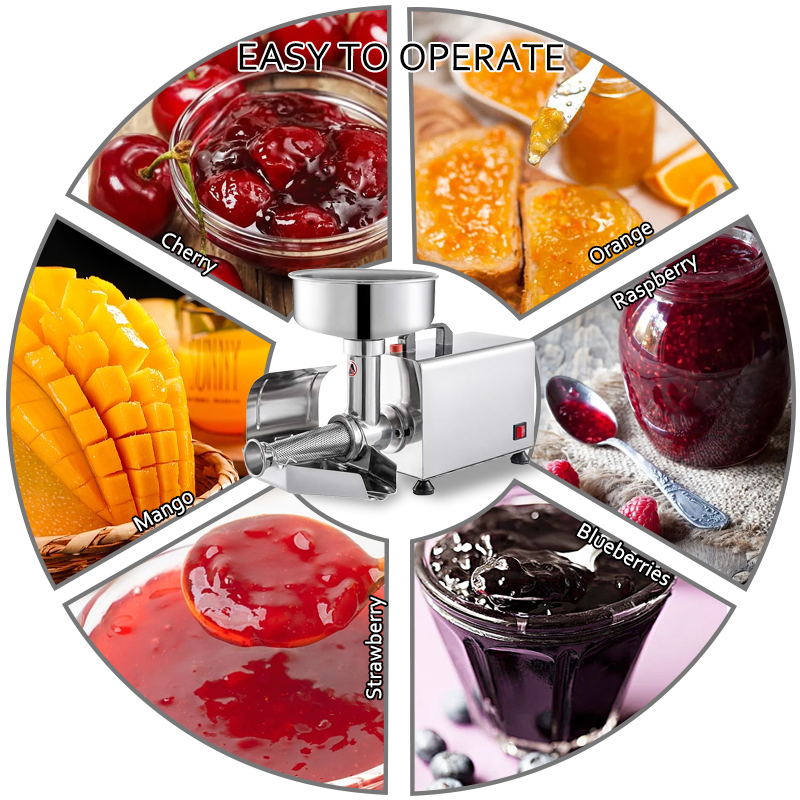
Why Material Durability Is Critical for Commercial Jam Machines
Commercial jam production creates uniquely demanding conditions that accelerate equipment degradation. The combination of high sugar content (up to 65% Brix), fruit acidity (pH 3.0–4.2), and thermal stress from pasteurization cycles creates aggressive corrosion risks. Material failures can trigger:
- Production halts: Unplanned downtime costs processors up to $15,000 hourly in lost output
- Safety breaches: Metal fatigue introduces contamination risks requiring product recalls
- Maintenance spikes: Premature component replacement increases annual costs by 25–40%
Stainless steel’s superiority in jam machines is demonstrated by its impact on operational metrics:
| Performance Factor | Non-Durable Material | 304/316 Stainless Steel |
|---|---|---|
| Annual Downtime | 120+ hours | <20 hours |
| Sanitation Pass Rate | 67% | 98%+ |
| Lifespan | 2–3 years | 10–15 years |
The viscous nature of jams intensifies mechanical wear on agitators and transfer pumps, making material resilience non-negotiable for continuous operation. Ultimately, durable construction prevents microbial harborage points in crevices while ensuring compliance with FDA 21 CFR Part 117 hygiene standards.
Stainless Steel Grades: 304 vs. 316 for Jam Machine Components
Corrosion Resistance in Acidic, High-Sugar Jam Environments
Making jam creates some pretty harsh conditions for equipment. The fruit acids typically range around pH 3.0 to 3.5, and those hygroscopic sugars really speed up chemical reactions that eat away at metals over time. Grade 316 stainless steel has something special going for it compared to regular 304 steel - it contains about 2 to 3 percent molybdenum which helps create protective oxide layers against what's called pitting corrosion. A study in the Journal of Food Engineering found that when put through their paces in simulated jam environments, 316 stainless lost only about half as much material as 304 stainless after running continuously for 1,000 hours. For parts like agitator shafts and heating coils where tiny pits can get clogged with organic stuff, this makes all the difference. Plants that switch to 316 stainless usually see their equipment last anywhere from three to five extra years before needing replacement. According to the Food Processing Technology Report from 2023, this upgrade cuts down on failures caused by acidic environments by roughly two-thirds, which is a huge benefit for operations running non-stop.
Sanitary Design Compliance: Surface Finish, Weld Integrity, and Drainability
For food processing areas, maintaining surface finishes below 0.8 microns roughness average (Ra) is essential to stop bacteria from sticking around. Both stainless steel types 304 and 316 can reach these standards when electropolished properly. However, type 316 has something extra going for it because of its much lower carbon content, especially in the L variant where it drops under 0.03%. This makes those welded seams hold up better over time. When facilities use automatic orbital welding equipment, they get those nice smooth joints without any hidden cracks that could harbor contaminants. The cleaning process matters too. Surfaces need to drain completely during those automated wash cycles so no sugary residues stick around. Even though both metals pass the 3-A Sanitary Standards requirements, operators notice a difference after hundreds of cleaning cycles. Type 316 keeps looking good while type 304 starts showing signs of wear on its surface finish after about 300 cleanings give or take.
| Property | Grade 304 | Grade 316 | Jam Processing Impact |
|---|---|---|---|
| Surface Retention | Degrades 15%/yr | Degrades 6%/yr | Longer polish effectiveness |
| Weld Defect Rate | 8/100 linear ft | 2/100 linear ft | Fewer microbial harborage points |
| Drainage Efficiency | 92% | 98% | Less sugar residue retention |
Key Durability Challenges Unique to Jam Machine Operation
Commercial jam production subjects equipment to extreme conditions that demand specialized material solutions. Understanding these operational stressors is essential for specifying components that withstand years of high-output processing.
Mechanical Wear from High-Speed Agitation and Viscous Product Handling
Jam’s high viscosity (typically 50,000–100,000 cP) exponentially increases mechanical strain during mixing and transfer:
- Impeller blades endure abrasive wear from fruit particulates and sugar crystals
- Pump seals degrade under constant pressure from thickened fruit mixtures
- Valve seats erode from suspended solids in concentrated preserves
Industry studies show viscosity-related wear can reduce component lifespan by 40% compared to lower-viscosity applications. Material hardness and impact resistance become non-negotiable for moving parts—especially where 316 stainless’s higher tensile strength (570 MPa vs. 515 MPa for 304) delivers measurable performance gains.
Thermal Stress During Pasteurization, Cooling, and CIP/SIP Cycles
Repeated thermal cycling between 60°C (140°F) during pasteurization and near-ambient temperatures during filling generates cumulative metal fatigue. Cleaning-in-Place (CIP) and Sterilization-in-Place (SIP) protocols exacerbate this through:
- Sudden 95°C (203°F) steam exposure during sterilization
- Rapid quenching with chilled water post-cleaning
- Daily expansion/contraction cycles stressing welds and joints
The coefficient of thermal expansion mismatch between dissimilar metals accelerates crack propagation in critical zones like heat exchangers and pipe junctions. Here, 316’s improved thermal stability and resistance to intergranular corrosion—particularly in welded 316L configurations—directly mitigate failure modes observed in long-term jam production.
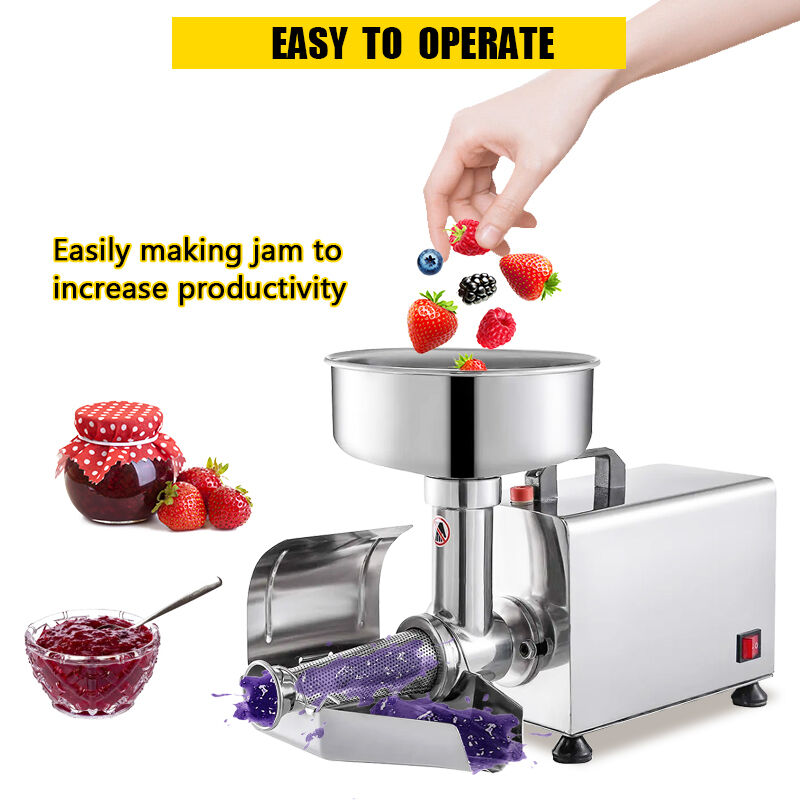
Optimizing Total Cost of Ownership Through Smart Material Selection
The real cost story in commercial jam making starts after the initial purchase. When manufacturers choose materials built to last, they actually save money down the road on things like fixing equipment, dealing with breakdowns, and replacing parts sooner than expected. Take stainless steel for instance. Grade 316L might cost about 20 to 30 percent more than regular 304 steel at first glance, but it stands up much better against the acidic fruits and sugary residues that eat away at machinery. Components made with this stronger steel can last anywhere from 40 to 60 percent longer in areas where wear happens fast, such as around agitator shafts and those hot heating coils. Investing in properly welded surfaces that stay clean also makes a difference. These surfaces cut down on how often workers need to scrub them clean, saving roughly 15 to 20 percent on cleaning time and slashing both chemical usage and water waste. Looking across the industry, most companies find their money back within 18 to 24 months when they upgrade materials because their machines break down less during important processes like pasteurization and when mixing thick jams. Thinking about total ownership costs rather than just what something costs when bought helps explain why spending extra upfront often pays off handsomely over ten years of regular use even though the sticker price looks higher initially.