
 EN
EN
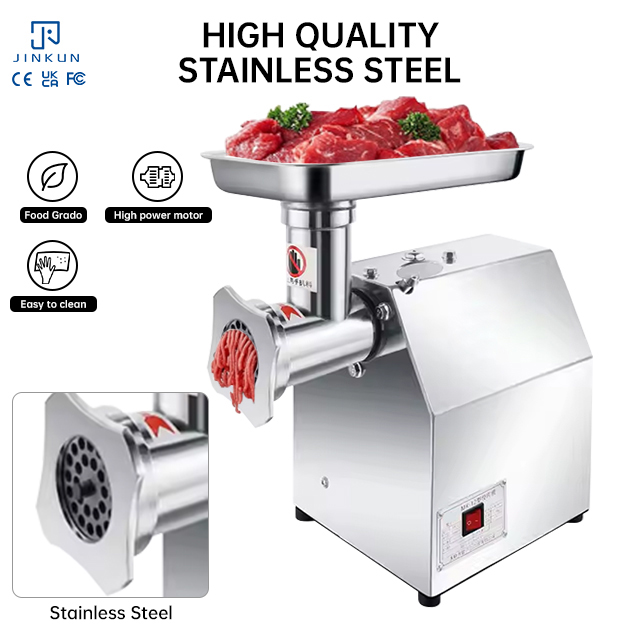
Motor Power and Duty Rating Matched to Small-Business Throughput Needs
Light vs. Medium Duty: Selecting the Right Wattage and Thermal Duty Cycle for Delis, Burger Joints, and Butcher Shops
When choosing a commercial meat grinder, it's all about getting the right motor specs for what the business actually needs. Small places like local delis that only run a few batches now and then usually work fine with 300 to 500 watt motors. These are meant for short bursts of work and come with cooling breaks built in so they don't overheat. On the flip side, busy burger spots that keep grinding nonstop throughout the day need something beefier. Medium duty models rated between 750 and 1200 watts handle the heat better and can go longer without resting. The numbers back this up too. According to the National Restaurant Association from last year, almost a quarter of all motor failures in restaurants happen because of overheating. That makes picking the right duty cycle really important for any meat counter operator. For full time butcher shops running eight hour days straight, going with copper wound motors plus automatic overload protection makes sense. These machines stay reliable even after hours of constant work without losing power or breaking down unexpectedly.
Real-World Throughput Benchmarks: 15–50 kg/hr Ranges and How They Align with Daily Production Goals
Throughput directly impacts small-business efficiency. The following benchmarks align grinder capacity with realistic daily production goals:
| Daily Volume Requirement | Ideal Grinder Throughput | Example Workflow |
|---|---|---|
| 50–100 kg (small deli) | 15–25 kg/hr | Handles 50 burger patties per lunch rush |
| 100–250 kg (burger joint) | 30–40 kg/hr | Processes whole-muscle cuts for 200 daily sandwiches |
| 250+ kg (artisan butcher) | 40–50 kg/hr | Supports custom sausage batches and retail packaging |
A 25 kg/hr grinder meets most deli needs but will strain under a butcher shop’s 300 kg daily demand—increasing risk of motor burnout. Throughput must be measured under load (not idle), as fibrous cuts like brisket reduce output by up to 30% compared to ground chuck.
Stainless Steel Construction and Component Durability for Long-Term Reliability
Auger, Grinding Plates, and Knife Retention: Why Food-Grade Stainless Steel Outperforms Aluminum in Commercial Meat Grinder Use
For small businesses processing meat daily, component durability directly impacts operational continuity. Food-grade stainless steel (typically 304 or 316L grade) delivers critical advantages over aluminum in three high-wear areas:
- Augers: Resist deformation under bone fragments or frozen meat, maintaining precise tolerances 3–5 longer than aluminum
- Grinding plates: Hardened stainless steel plates retain sharp cutting edges through 50,000 lbs of product before replacement—versus aluminum’s 15,000-lb average
- Knife retention: Superior tensile strength prevents blade wobble, reducing uneven wear by 70% (NSF equipment standards)
Resistance to corrosion matters just as much as anything else. Stainless steel doesn't let oxidation happen when exposed to blood, saltwater, or common cleaning solutions. Aluminum tells a different story though it gets pitted over time, creating hiding spots for germs. Some studies suggest these pits can actually boost biofilm formation rates by around 90-95% in equipment that doesn't meet safety standards. When it comes to heat tolerance, stainless steel really shines. Regular dishwashers run around 400 degrees Fahrenheit, and aluminum parts start to warp under that kind of stress. But stainless steel holds up against temperatures as high as 1600 degrees Fahrenheit without bending out of shape. This means medical tools stay properly aligned even after hundreds of cleanings, something hospitals rely on for patient safety.
| Component | Stainless Steel Performance Advantage | Aluminum Risk Factor |
|---|---|---|
| Auger | Maintains tolerance after 5+ tons of meat | Warps under high-torque loads |
| Cutting Blades | Holds edge 3 longer | Dulls rapidly, creates meat smearing |
| Corrosion Resistance | Passes NSF/3-A sanitation audits | Pitting traps bacteria |
This durability translates into lower total ownership costs. Butcher shops report stainless steel grinders require replacement parts 60% less frequently than aluminum units—reducing both downtime and maintenance expenses.
NSF-Compliant Design and Efficient Cleaning for Daily Operational Safety
Modular Disassembly, Smooth Surface Finishes, and Sanitization Speed in High-Volume Small-Business Kitchens
The NSF certification means meat grinders meet rigorous hygiene requirements designed specifically to stop bacteria from building up over time. Most modern commercial models come with modular parts that let kitchen workers take apart the entire unit in just three minutes flat something that matters a lot when business is booming at lunchtime. The smooth stainless steel surfaces have no hidden spots for germs to hide in either. Food safety reports show these certified machines cut down on cleaning efforts by around 40% versus older equipment that doesn't meet current standards. Deli owners handling about 50 kilograms of product each day find that being able to snap everything back together without tools makes it much easier to clean properly between different runs of meat products. This kind of setup helps maintain HACCP protocols too. When shopping for new equipment, look for units with rounded edges and surfaces below 10 Ra roughness rating. These features make sure there's nowhere for bits of meat to stick around after cleaning, which keeps inspectors happy during routine checks.
Smart Sizing and Total Cost of Ownership for Space-Limited Operations
Countertop vs. Floor-Standing Meat Grinder Tradeoffs: Footprint, Vibration, Stability, and Scalability
Meat grinders designed for countertops save precious space in small kitchens, usually taking up less than a square meter and running pretty quietly too. But these compact models can only handle around 15 kilograms per hour before they reach their limit. Floor standing versions need about three to four times as much room on the ground, but they bring real industrial strength to the table with capacities exceeding 50 kg per hour, making them ideal for expanding butcher shops. The top end floor models come equipped with special mounts that cut down on vibrations, which means less noise disturbance in the workspace. These premium units also work well with various attachments such as sausage stuffers. When it comes to scaling operations, most deli owners find that countertop machines work fine if they process less than 80 kg of meat each week. For businesses needing to handle over 200 kg daily without worrying about stability problems, floor mounted grinders become essential according to standard NSF kitchen design guidelines.
Beyond the Price Tag: Warranty Coverage, Service Network Access, and Replacement Part Availability by Brand
Total ownership costs for commercial meat grinders extend 30–50% beyond purchase price over five years. Prioritize brands offering:
- A minimum 2-year comprehensive warranty covering motor burnout (average repair cost: $740, Ponemon Institute, 2023)
- Certified service centers within a 50-mile radius for urgent blade replacements
- Industry-standard 3-day shipping for common components like augers and cutting blades
Independent studies show operations with localized technical support experience 67% less downtime. Always verify OEM part inventories before purchase—third-party alternatives cause 17% higher failure rates in NSF sanitation tests.