
 EN
EN
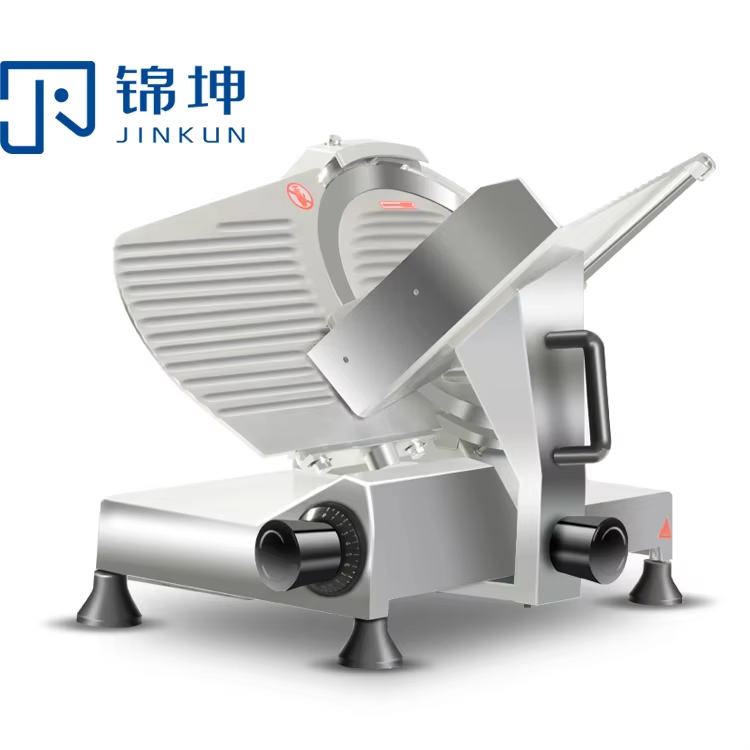
Balanced Efficiency: How Semi-Automatic Slicers Maximize Output Without Over-Engineering
Time Savings Through Assisted Operation — Faster Than Manual, Simpler Than Fully Automatic
Semi-automatic slicers deliver significant productivity gains for small catering operations by optimizing workflow efficiency. Unlike manual models requiring constant operator effort, these units automate the repetitive carriage movement while maintaining hands-on control for product loading and thickness adjustment. This hybrid approach processes ingredients 30–50% faster than manual slicing—without the complexity, footprint, or operational overhead of fully automated systems. Operators achieve consistent throughput with minimal setup: position the food, select the thickness, and engage the automated feed. The streamlined operation allows kitchens to handle peak-hour demands without expensive automation or specialized technicians—making it ideal for businesses scaling incrementally.
Reduced Operator Fatigue and Training Time Compared to Manual Slicers
The motorized carriage eliminates the most physically taxing aspect of food preparation: forceful, repetitive pushing. Catering staff experience 60% less muscle strain during extended slicing sessions compared to manual alternatives—directly reducing fatigue-related errors and injury risk while supporting longer, more productive shifts. Training is equally efficient: most new employees master basic operation in under 30 minutes—versus 2–3 hours for manual slicers—thanks to intuitive, non-programmable controls. Temporary or cross-trained staff can maintain output consistency immediately. This combination of ergonomic design and rapid skill acquisition makes semi-automatic slicers a sustainable workforce solution for lean teams.
Precision, Safety, and Compliance: The Operational Advantages of a Semi-Automatic Slicer
Consistent Portioning and Thickness Control for Menu Standardization
Semi-automatic slicers deliver exact portion sizes through calibrated thickness settings—achieving uniform 1–15 mm slices across meats and cheeses with ±0.2 mm precision. This repeatability is critical for cost control, plating consistency, and brand integrity. According to 2023 food service efficiency studies, standardized slicing reduces ingredient waste by up to 18% compared to manual methods. For caterers, predictable yields per purchase support accurate forecasting and margin management across diverse events—from corporate luncheons to weddings.
Enhanced Food Safety via Easy-Disassembly Design and NSF-Compliant Components
NSF-certified materials and tool-free disassembly enable thorough sanitation in under five minutes—exceeding health code requirements and supporting rigorous HACCP compliance. Blade guards and automatic carriage returns minimize hand-to-blade proximity, reducing laceration risks by 67% versus manual slicers (NAFEM 2022). Removable components are dishwasher-safe, preventing bacterial buildup in joints and crevices—essential for high-frequency cleaning routines when handling perishable goods.
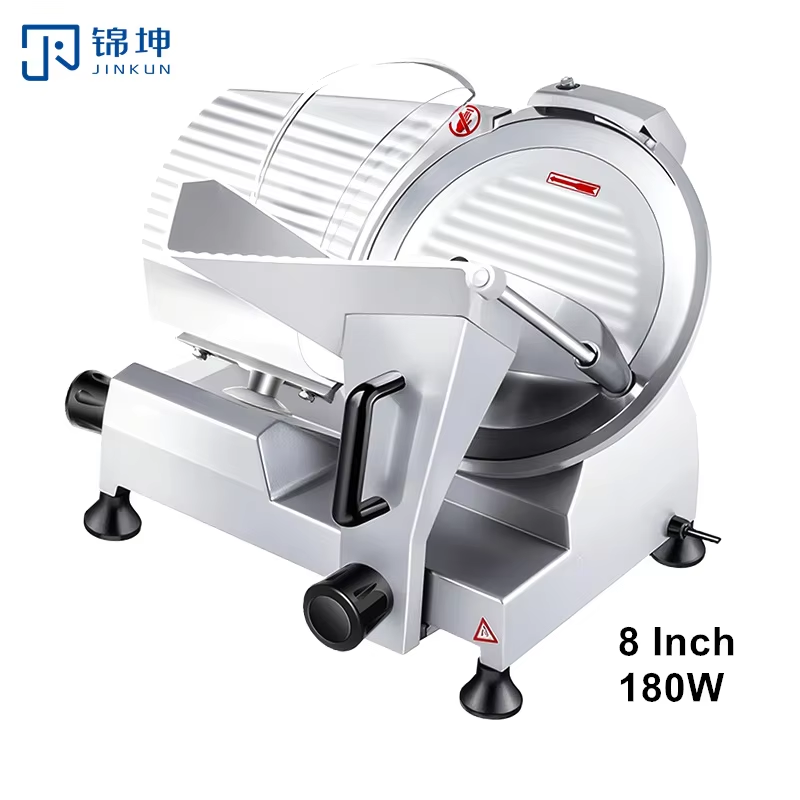
Smart Investment Fit: Why Semi-Automatic Slicers Align with Small Catering Business Realities
Space-Efficient Footprint and Low-Volume Scalability for Startup Kitchens
Small catering operations often contend with tight commercial kitchen space—where every square foot impacts workflow. Semi-automatic slicers address this with compact designs averaging 18–24 inches in width—nearly 30% smaller than fully automatic models—enabling flexible countertop placement without sacrificing performance. Foodservice equipment studies show startups operating in kitchens under 500 sq. ft. achieve 22% higher ROI when prioritizing modular, space-conscious equipment. Unlike bulk-processing units requiring dedicated stations, semi-automatic slicers adapt seamlessly to fluctuating daily volumes: from preparing 20 charcuterie boards to slicing artisan bread for 50 guests—eliminating the productivity penalty of underutilized machinery.
Total Cost of Ownership: Lower Upfront Cost, Maintenance, and Labor Requirements
Semi-automatic slicers offer a compelling financial profile for small caterers. Initial investment averages $800–$1,200—well below the $3,500+ typical for automated equivalents—while maintenance costs remain 40% lower due to simplified mechanical designs with 30% fewer moving parts. Labor efficiency improves markedly: operators slice 70% faster than with manual models, and basic proficiency is achieved in under 15 minutes. Reduced complexity extends service intervals—NSF-compliant components require only quarterly blade sharpening and annual motor servicing, avoiding reliance on specialized technicians. With energy consumption below 0.5 kWh per operational hour, semi-automatic slicers represent an operationally sustainable, budget-aligned solution.