
 EN
EN
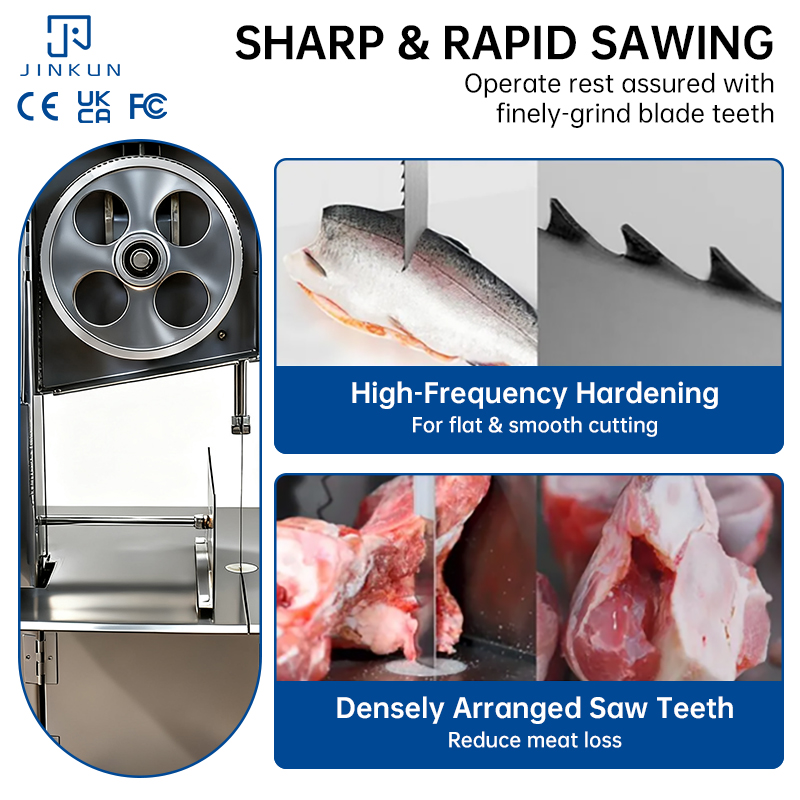
How Blade Sharpness Directly Enhances Bone Saw Machine Efficiency
The Physics of Sharpness: Edge Geometry and Reduced Cutting Resistance
A sharp blade’s efficiency stems from its microscopic edge geometry. Minimizing the cutting edge radius concentrates force into a narrower zone, enabling clean shearing through bone and cartilage—rather than compressive crushing. This reduces mechanical work per cut and lowers friction at the blade–material interface. In a bone saw machine, a keen edge requires less lateral force to initiate the cut, helping the motor sustain higher RPM under load and avoid stalling. Reduced resistance also limits heat buildup, preventing protein denaturation and preserving meat quality. Operators maintain consistent feed rates without extra effort, boosting throughput. Crucially, the blade’s bevel angle and tooth design determine whether it slices or tears hard tissue—an optimized geometry ensures clean separation, maintaining meat integrity and minimizing micro-fracturing that can leave hazardous bone fragments in product. These physical advantages compound across thousands of cuts in high-volume processing, directly improving energy use, safety, and operational efficiency.
Empirical Evidence: 42% Lower Motor Load with Optimally Sharp Blades (USDA-FSIS 2023)
Rigorous data confirms the link between sharpness and motor efficiency. A 2023 USDA Food Safety and Inspection Service (USDA-FSIS) study found that blades sharpened to the manufacturer’s recommended geometry reduced motor load by 42% compared to those after 8 hours of continuous use. This translates to measurably lower electricity consumption per cut and reduced mechanical stress on drive trains—slowing bearing wear and preventing belt slippage. Facilities adopting disciplined sharpening protocols report fewer stoppages from blade binding and more consistent cut thickness, especially critical for frozen bone-in products where sustained blade speed is essential. For large beef processors, these gains can yield annual savings of thousands of dollars in energy costs and avoided maintenance downtime—making blade sharpness not just a best practice, but a quantifiable lever for operational performance.
Operational Efficiency Gains from Sharp-Blade Bone Saw Machines
Yield Preservation: Minimizing Trim Loss in High-Value Cuts Like Beef Rib Sections
Sharp blades preserve yield in premium primal cuts by enabling precise, clean separation with minimal bone fragmentation. Dull blades tear rather than slice, creating irregular edges that demand excessive secondary trimming. In beef rib sections, even a 2 mm increase in trim depth discards over 150 g of salable meat per carcass. According to the Meat Processing Efficiency Report 2022, facilities using optimally sharp bone saw blades reduce material waste by 12–15% compared to those operating with dull blades. This stems from three interrelated benefits: smoother cut surfaces requiring less rework, fewer bone splinters contaminating product, and tighter portion control that meets customer specs without over-trimming. For high-value cuts where margin is measured in grams, this yield lift delivers immediate revenue uplift per carcass.
Energy Efficiency: 89.3% Mechanical Transfer Rate in Modern Electric Bone Saw Machines
Sharp blades maximize the mechanical transfer rate—the proportion of input power converted directly into cutting action. A 2023 energy audit of electric meat processing equipment found that machines with properly sharpened blades achieve an 89.3% transfer rate, meaning nearly nine-tenths of electrical energy drives productive cutting. By contrast, dull blades drop this figure below 70%, forcing motors to draw excess current and generate wasteful heat. As verified by the International Meat Processing Association (2023), a single band saw operating with a sharp blade can reduce energy use by up to 10% per shift. That efficiency gain extends beyond electricity savings: lower motor load reduces wear on bearings, belts, and gearboxes, lengthening maintenance intervals and cutting unplanned downtime. Over time, these compounding benefits—lower energy bills, longer component life, and fewer disruptions—make routine sharpening a high-return investment.
Industrial Implementation: Optimizing Bone Saw Machine Performance Across Processing Facilities
Case Study: A Leading Processor’s Sharp-Blade Regimen Achieves 23% Throughput Gain
A major European pork processor implemented a structured blade maintenance program—including daily sharpness verification and scheduled replacements—for its bone saw machines. Over six months, the facility achieved a 23% increase in throughput, as documented in its internal 2023 analysis. The improvement was driven by reduced blade drag, fewer line stoppages, and sustained motor performance aligned with the 89.3% mechanical transfer efficiency typical of modern electric bone saws. Operators noted cleaner cuts and markedly less bone fragmentation—enhancing both food safety and product presentation. Concurrently, reduced trim loss in high-value cuts like beef rib sections amplified profitability. The regimen paid for itself within two months through combined gains in yield, energy savings, and uptime—demonstrating that disciplined blade management is a scalable, high-impact strategy for industrial bone saw efficiency.
FAQ
Why is blade sharpness important for bone saw machines?
Blade sharpness is crucial because it reduces cutting resistance, minimizes mechanical work per cut, and limits heat buildup, which helps maintain meat quality and improves equipment efficiency.
How does blade sharpness affect energy efficiency?
Sharp blades maximize the mechanical transfer rate, ensuring more input power is converted into productive cutting action. This leads to reduced motor load, lower energy consumption, and longer machine lifespan.
What are the benefits of sharp blades for meat processing facilities?
Facilities using sharp blades can experience less material waste, improved product quality, fewer stoppages, lower energy costs, and greater throughput. These advantages contribute to significant cost savings and operational efficiency.
What is the impact of dull blades on meat processing?
Dull blades can cause tearing instead of slicing, resulting in irregular edges, increased trim loss, more bone fragmentation, higher energy consumption, and greater wear on machinery.
Can disciplined blade management improve profitability?
Yes, a well-maintained blade regimen can lead to enhanced throughput, minimized trim loss, and energy savings, which together amplify profitability and maximize operational performance.