
 EN
EN
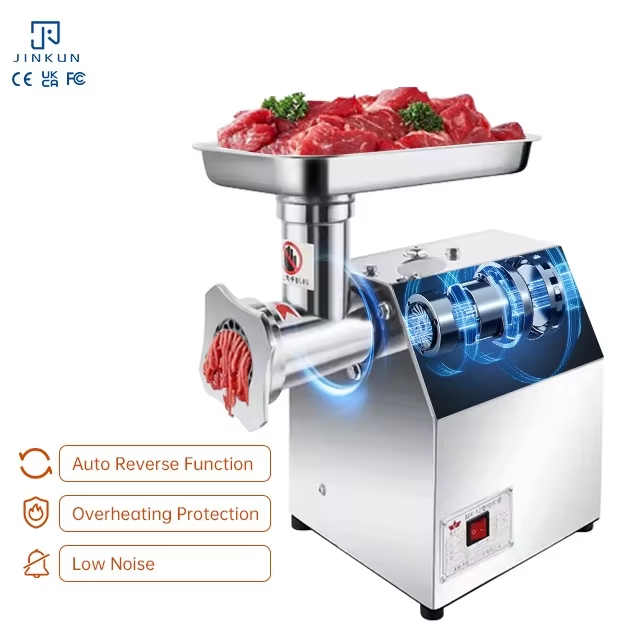
Solving Core Operational Challenges with Meat Tenderizer Machines
Mechanical tenderization: unlocking value in tough cuts (flank, skirt, sirloin, tri-tip)
Tough cuts like flank, skirt, sirloin, and tri-tip are often underutilized due to dense muscle fibers—but mechanical tenderization transforms them into consistently tender, high-value menu items. Unlike manual malleting, which yields uneven results and risks tearing or moisture loss, commercial tenderizer machines break down connective tissue uniformly while preserving natural juiciness. This allows butcher shops to elevate lower-cost primal sections—such as tri-tip—into premium offerings that command pricing near tenderloin levels, all without increasing sourcing expenses. The result is expanded product range, leaner inventory, higher sell-through, and measurable waste reduction.
Throughput and labor gains: replacing manual malleting in high-volume butcher shop workflows
Manual malleting is physically taxing and inherently slow—especially during peak production. Replacing it with an automated tenderizer delivers immediate workflow improvements: one operator can process up to 200 lbs/hour, a 75% time savings over manual methods. This throughput gain eliminates bottlenecks, reduces rework from inconsistent tenderness, and frees staff for higher-value tasks like trimming, portioning, or customer engagement. For shops supplying restaurants or retail chains, the consistency also ensures every cut meets exacting texture and thickness standards—supporting scalable operations without overtime or added labor costs.
Proven ROI: How Meat Tenderizer Machines Improve Yield, Reduce Waste, and Support Premium Pricing
Butcher shops realize immediate financial benefits through three interlinked profit drivers:
- Yield improvement: Mechanical tenderization increases usable yield by 8–12% by converting previously underutilized portions—like flank and skirt—into saleable, premium-grade steaks.
- Pricing leverage: Tenderized sirloin achieves texture ratings comparable to ribeye in blind taste tests, enabling price parity despite 25–30% lower input costs.
- Labor efficiency & margin expansion: With 75% faster processing and consistent output, shops reduce prep labor while commanding 15–20% price premiums on tenderized products during peak demand—directly boosting gross margin per pound.
Seamless Integration into Butcher Shop Production Lines
Compatibility with meat flatteners, conveyors, and packaging stations to eliminate bottlenecks
Modern meat tenderizer machines integrate natively into existing production lines—positioned seamlessly between flatteners and conveyors to maintain continuous flow. Standardized mounting interfaces and synchronized speed controls eliminate manual transfers, cutting handling time by up to 40% in high-volume settings. Direct integration with vacuum packaging stations ensures uninterrupted handoff, minimizing bacterial exposure and preserving meat quality. This end-to-end automation enables shops to process 15–20% more volume daily compared to standalone systems—without expanding floor space or adding labor.
Adjustable depth and customization: tailoring tenderization for beef, poultry, and exotic meats
Precision needle penetration (0.5–15 mm) and programmable pattern controls let operators optimize results across species and cuts—from delicate chicken breasts to dense venison or heritage-breed pork. Touchscreen presets allow rapid switching between light grid patterns for schnitzel and aggressive diamond configurations for beef flank. Modular blade cartridges swap in seconds for specialized applications like bison ribs or alligator, while pressure-sensitive rollers auto-adjust to irregular shapes. This level of control prevents over-tenderization—critical when maximizing yield on high-margin dry-aged or artisanal meats.
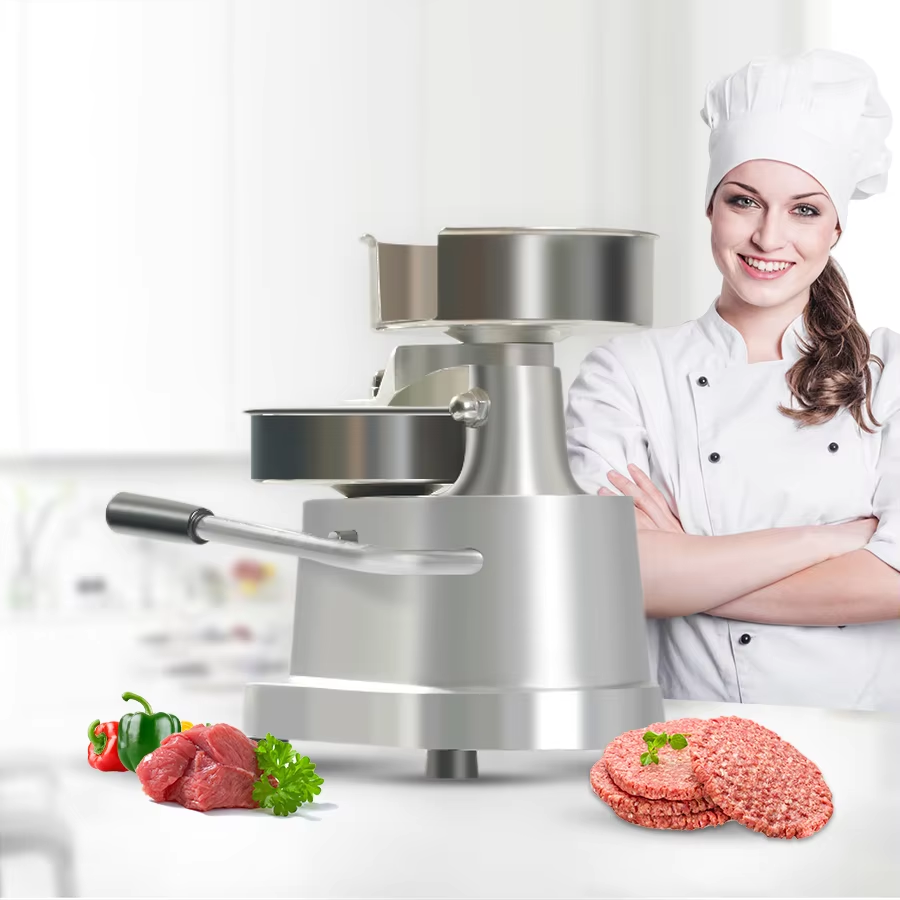
Built for Commercial Reliability: Safety, Durability, and NSF Compliance
Critical safety features—guarding, emergency stops, and NSF-certified construction for daily use
Commercial meat tenderizers are engineered for relentless daily operation without compromise on safety or sanitation. Physical guarding fully encloses blades or rollers during loading and processing, while dual-position emergency stop buttons deliver instantaneous shutdown if hands slip or foreign objects enter the zone. Crucially, NSF certification validates hygienic design across all food-contact surfaces and internal mechanisms—ensuring cleanability, eliminating bacterial harborage points, and meeting strict regulatory requirements. Constructed entirely from corrosion-resistant, food-grade stainless steel, these machines support long-term reliability, simplified maintenance, and full compliance with OSHA and USDA guidelines.
FAQ
What are the primary benefits of using a meat tenderizer machine?
Meat tenderizer machines enhance yield, improve texture, streamline production, and reduce waste. They help transform tough cuts into premium-grade products while freeing labor for higher-value tasks.
Are tenderizer machines suitable for different types of meat?
Yes, most modern machines offer adjustable depth controls and customizable patterns to work with beef, poultry, pork, and even exotic meats like venison or bison.
How do meat tenderizer machines integrate into production lines?
They are designed for seamless integration alongside flatteners, conveyors, and vacuum packaging stations, ensuring uninterrupted workflow and maximal efficiency.
Are these machines safe for daily commercial use?
Yes, commercial tenderizer machines are built with safety features like physical guarding, emergency stop buttons, and NSF-certified designs to ensure hygiene and compliance with regulatory standards.
What is the ROI for butcher shops when investing in these machines?
Shops can achieve ROI through yield improvements (8–12%), consistent quality, labor savings, waste reduction, and the ability to charge premium pricing for tenderized products.
Table of Contents
- Solving Core Operational Challenges with Meat Tenderizer Machines
- Proven ROI: How Meat Tenderizer Machines Improve Yield, Reduce Waste, and Support Premium Pricing
- Seamless Integration into Butcher Shop Production Lines
- Built for Commercial Reliability: Safety, Durability, and NSF Compliance
-
FAQ
- What are the primary benefits of using a meat tenderizer machine?
- Are tenderizer machines suitable for different types of meat?
- How do meat tenderizer machines integrate into production lines?
- Are these machines safe for daily commercial use?
- What is the ROI for butcher shops when investing in these machines?