
 EN
EN

How a Meat Tenderizer Machine Improves Meat Quality and Customer Experience
The Science of Mechanical Tenderization: How a Meat Tenderizer Machine Breaks Down Toughness
Muscle fiber and connective tissue structure: Why certain cuts resist tenderness
The tougher cuts like chuck, round and flank steaks have lots of collagen and thick muscle fibers that just won't break down easily when cooked. Collagen is basically what holds everything together in connective tissues, and it gets even tougher in meat from older animals or ones that were exercised a lot. Heat things under around 150 degrees Fahrenheit and watch what happens next the collagen starts shrinking fast, pushes out all the moisture, leaving behind those frustratingly chewy bits nobody wants. Left alone, these natural defenses against tenderness keep getting in the way of good eating experiences for customers.
Precision blade or needle action: Disrupting collagen without compromising integrity
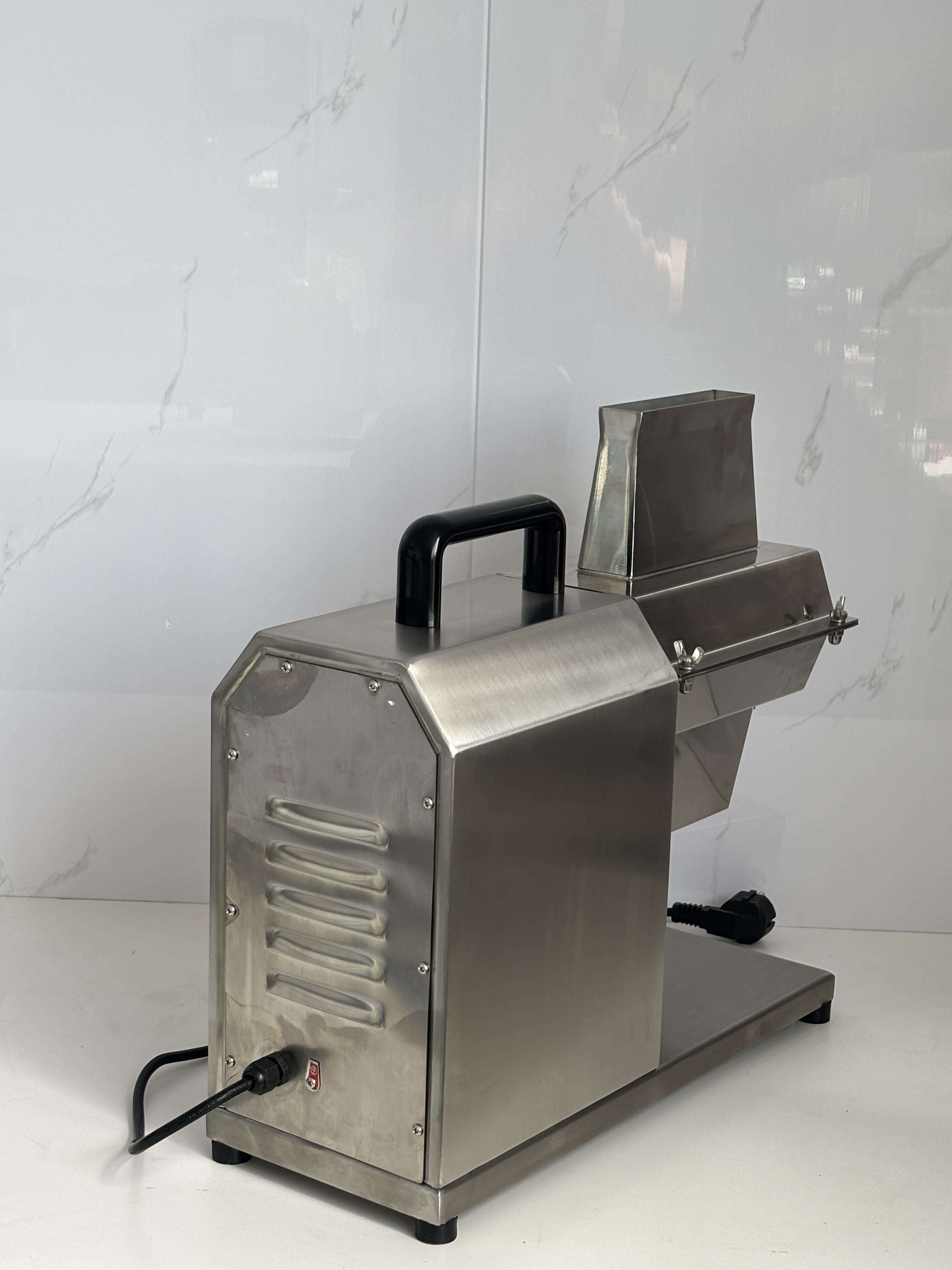
Mechanical tenderizers work by breaking down the tough parts of meat using rows of stainless steel needles or blades that go into the flesh at specific depths. When these tools get to work, they cut through those stubborn collagen strands and break apart muscle fibers, but don't mess with the actual proteins or leave visible damage on the surface. What matters most is how deep those needles actually go. The design keeps them just shallow enough so the meat stays intact as a whole piece, which means less juice runs out during cooking and there's no risk of turning everything into ground meat. Tests looking at texture show pretty impressive results too. Some studies suggest this technique can make meat about half as tough as it was originally, and works consistently well whether we're talking about beef cuts, chicken breasts, pork chops, or even wild game meats. Works great no matter how dense the cut is or how old the animal was when slaughtered.
Flavor & Juiciness Amplification: Enhanced Marinade Absorption and Moisture Retention
Micro-channel creation: How a meat tenderizer machine accelerates marinade penetration by up to 40%
When chefs use precision blades or needles on meat surfaces, they create tiny channels throughout the flesh that dramatically expand the available area for absorbing liquids. These microscopic pathways let marinades penetrate much deeper into muscle fibers instead of just sitting on top waiting to soak in slowly over time. Studies indicate that this method can actually speed up flavor absorption by around 30 to 40 percent when compared to regular untreated meat cuts. The result? Meals where spices and seasonings are spread throughout every bite rather than concentrated only at the outer layer. Home cooks who try this technique often notice a real difference in how well their seasonings work their way into the meat.
USDA-backed evidence: 30% higher moisture retention in tenderized chicken breasts post-cooking
When we break down those tough collagen fibers before hitting the heat, meat becomes much less likely to lose all its juices during cooking. According to some studies from USDA folks, chicken breasts that get this treatment actually hold onto around 30 percent more moisture after being roasted compared to regular ones. What happens here is pretty interesting at a molecular level. The structure changes so the meat isn't as harsh on itself when cooked, keeping those precious liquids inside for longer periods. Restaurants have noticed something too. Many report seeing about a two thirds drop in customers griping about dry chicken on their plates since implementing these techniques in their kitchens.
Consistent, High-Quality Results Across Service Volumes
Keeping meat quality consistent in busy restaurant kitchens remains a big challenge when volumes go up and down all the time. When chefs rely on hand tools, there's just too much room for error. Fatigue leads to inconsistent cuts, rush jobs mess up the precision, and quality often takes a hit during those hectic dinner rushes. That's where a good meat tenderizer machine makes all the difference. These machines take out the guesswork with their automatic settings and built-in calibrations. They punch through each piece of meat exactly the same way no matter if it's just a few steaks or hundreds of pounds worth. The meat stays intact but gets uniformly tenderized. What happens next? Cooking times become predictable, restaurants waste about 15 to 20% less meat that's either too tough or too soft, and customers keep coming back happy even when the kitchen is slammed at lunchtime.
Comparative Texture Consistency Methods
| Method | Consistency Level | Volume Scalability | Labor Dependency |
|---|---|---|---|
| Manual Tenderizing | Low (±30% variance) | Limited | High (skill-dependent) |
| Mechanical Tenderizing | High (±5% variance) | Unlimited | Low (automated) |
Commercial Advantages: Efficiency, Versatility, and Cost-Effective Premium Experiences
Implementing a professional meat tenderizer machine drives tangible operational benefits in commercial kitchens while elevating customer satisfaction through premium-quality offerings.
Time savings and labor reduction: One-pass tenderizing vs. manual methods in high-volume kitchens
Automated tenderizing delivers 65% faster processing compared to manual poundingâ€handling 300+ portions per hour in a single pass. This efficiency frees kitchen staff for value-added tasks like plating, garnishing, and real-time quality assurance. During peak service, it prevents bottlenecks without sacrificing consistencyâ€a reliability manual methods simply cannot match.
Cross-meat compatibility: Optimizing beef, poultry, pork, and game with adjustable depth settings
The adjustable needle or blade can penetrate anywhere from 2 to 15 mm into meat, which allows for breaking down collagen exactly how it needs to be based on what kind of protein we're dealing with and how tight those fibers are packed together. When working with something delicate like chicken, operators will set things pretty shallow so they don't end up turning everything into mush. But when tackling tougher cuts such as venison or brisket, going deeper makes all the difference in getting that meat properly tenderized. And this adaptability doesn't stop there either. Take beef brisket for instance. Once it's been treated with this method, it soaks up marinades about 40 percent quicker compared to regular untreated pieces. That means richer flavors develop faster and gives kitchens way more options when planning their operations around different types of meats.