
 EN
EN
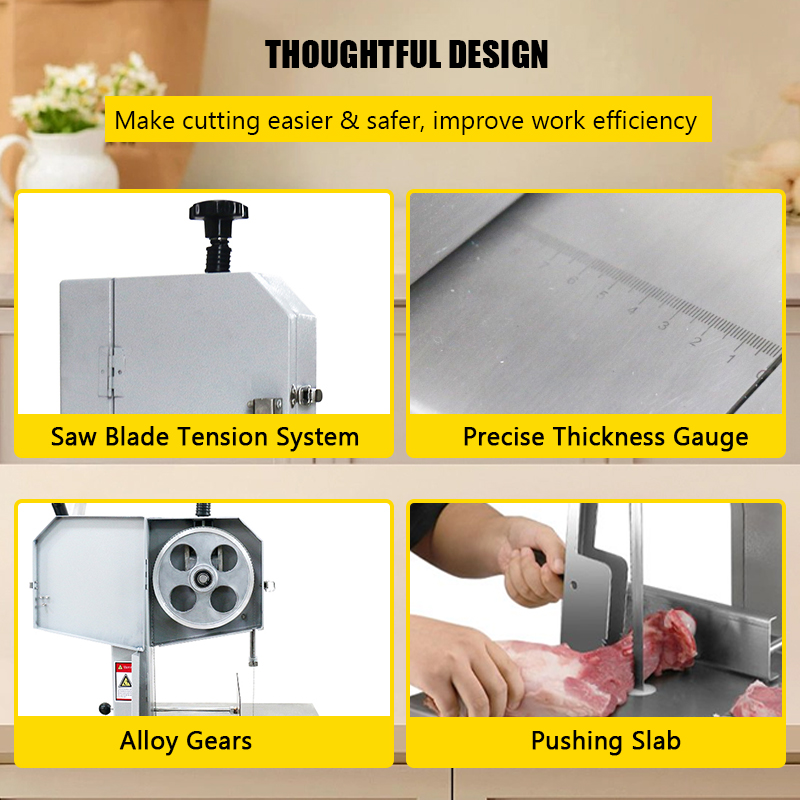
Blade Design and Adaptability for Bone Size and Density
Tooth Pitch and Geometry: Optimizing Blade Selection for Poultry, Pork, and Beef Bones
The way teeth are arranged on cutting tools makes all the difference when it comes to how efficiently different kinds of bones get processed. For poultry bones which are thin, full of holes, and not very strong at all, we need blades with fine teeth spacing between 6 to 10 teeth per inch along with narrow spaces between the teeth. This helps prevent splinters and keeps the valuable marrow intact. Pork bones tell a different story since they're tougher and denser materials. Medium pitch blades ranging from 3 to 5 teeth per inch work best here because they strike a good balance between cutting speed and controlling fragments. When dealing with beef bones or those from large game animals, the situation calls for coarser blade designs with just 1 to 3 teeth per inch. These require stronger teeth construction and carbide tips that can handle impacts over 700 Newtons per square centimeter. Keeping the rake angle under 15 degrees really helps protect the cutting edge when working through tough outer layers of bone. Also worth mentioning are special tooth patterns like M-shaped teeth or variable pitch arrangements that cut down on vibrations and make things steadier when processing thicker sections. Get these geometry adjustments right and operators can save anywhere from 30 to 40 percent in cutting energy compared to standard blades, all while maintaining the delicate cellular structures within the bone marrow itself.
Tension, Sharpness, and Heat Management for Consistent Cuts Across Small and Large Bone Sections
Getting consistent cuts right depends heavily on keeping blade tension within the sweet spot of around 25,000 to 35,000 pounds per square inch. This level of tension stops the blade from bending when it hits different densities in the material, maintaining dimensional consistency down to plus or minus 0.3 mm throughout the entire cut path, whether slicing through delicate rib structures or denser vertebrae sections. Blades that get dull create way more friction too, sometimes increasing heat output by as much as 60%. That raises local temperatures past dangerous levels for bone cells at about 47 degrees Celsius, which can actually kill those important osteocytes. Cold treatment processes for blades triple their lifespan because they spread out the carbides evenly throughout the metal, which means less heat builds up over time during continuous work. Combine these cryo-treated blades with active air knife cooling systems that keep surfaces under 40 degrees Celsius even when working on frozen femurs, plus strategic pauses in cutting cycles for bigger bones, and we see a system that protects collagen integrity while producing clean cuts with kerf widths from just 0.8 mm for ribs all the way up to 3.5 mm for vertebrae applications.
Power and Control Parameters in Bone Saw Machines
Adjustable RPM and Motor Torque: Balancing Speed, Force, and Bone Integrity
Bone saw machines used in industrial settings need to modulate their power dynamically to maintain the integrity of different bone structures. When cutting through various types of bones, operators change the RPM settings from around 800 all the way up to 5000 depending on what they're working with. For example, chicken bones usually work best at over 3000 RPM for smooth cuts without much resistance. But when dealing with tougher beef bones, things get tricky. These require much slower speeds, about 1000 RPM, otherwise there's a real risk of creating tiny fractures or causing heat damage. The motor power needs to match too. Machines rated at 7.5 kW handle the heavy duty stuff like thick cow femurs just fine, but something as light as a 2 kW unit will do for those delicate poultry spines. Most modern equipment comes with preset RPM and torque settings that make sure everyone gets consistent results regardless of who is operating it. This consistency matters a lot in busy processing plants because if the machine starts drifting out of calibration, waste rates can jump by nearly 20% during trimming operations.
Frozen vs. Fresh Bone: How Material State Impacts Optimal Cutting Settings
The temperature of bone really changes how it cuts through different materials. When working with frozen bone at around minus 20 degrees Celsius, the material becomes much more brittle. This means operators need about 40 percent more force to cut through compared to fresh tissue. That's why many setups require powerful motors and special carbide tipped blades just to handle the job properly. On the flip side, bones at room temperature can handle higher revolutions per minute, sometimes going up to 4500 RPM, but the blades have to be extremely sharp to avoid damaging surrounding tissues and creating uneven fractures. Anyone who has worked with frozen ribs knows they need to cut at half the speed compared to fresh ones to prevent warping and distortion problems. The newer temperature sensing equipment helps out a lot here, adjusting both pressure and air flow automatically during cold processing jobs. These systems cut down on particles that would otherwise end up contaminating roughly 15% of the nearby meat product.
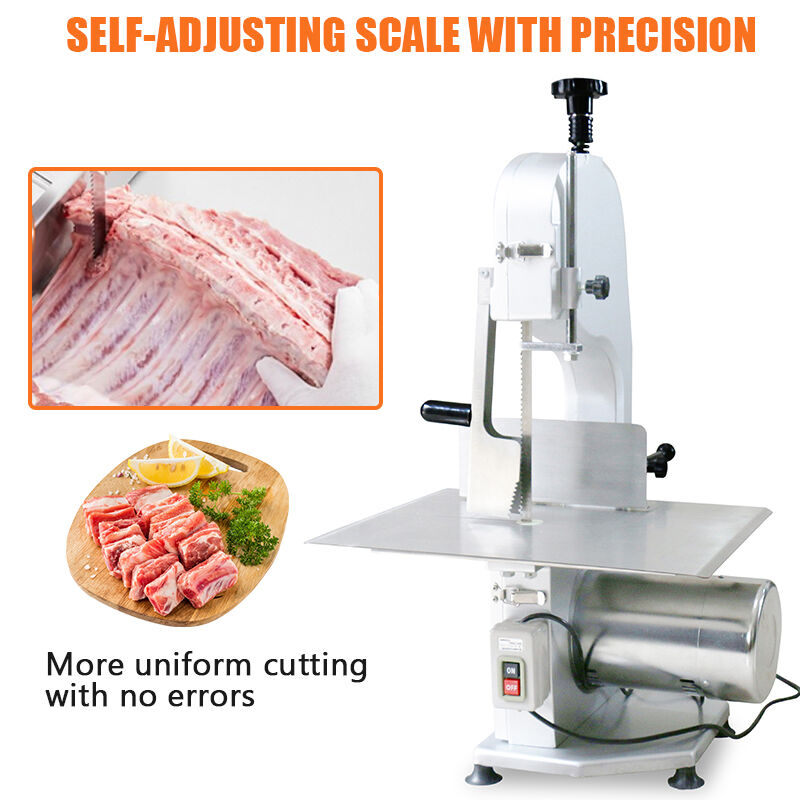
Machine Type Selection Based on Bone Dimensions and Processing Goals
Band Saws vs. Reciprocating vs. Circular Saws: Matching Bone Saw Machine Types to Bone Thickness and Shape
Choosing the right machine depends on matching blade movement patterns to bone shapes and what needs to get done. Band saws have those long, thin blades that move continuously between guides, making them great for handling big, awkward bones like beef femurs over 15 cm across. They let workers make detailed curved cuts without wasting too much material along the way. Reciprocating saws cut fast with strong back-and-forth motions, so they work well on smaller pieces, frozen meat, or oddly shaped bones under 10 cm thick. But there's a tradeoff here since the saw tends to wobble a bit, which can throw off straight lines and consistent results. Circular saws are all about getting lots of cuts done quickly when dealing with medium sized bones between 5 and 15 cm thick. These machines produce straight, uniform slices at impressive speeds, which is why they're so popular in standard cutting operations. When things go wrong? A reciprocating saw on tough cow bones will just vibrate itself into inaccuracy problems. Circular saws meanwhile struggle with delicate chicken deboning tasks because they don't bend around corners very well. What matters most varies depending on production goals. Artisan butchers prefer band saws for their fine control, while processing plants rely on reciprocating units to break down carcasses faster. Industrial operations stick with circular systems where speed and volume take precedence over intricate detail work.
Practical Cutting Capacity Limits of Industrial Bone Saw Machines
Industrial bone saws work within certain limits set by their physical design and mechanical capabilities, mainly looking at things like throat depth, motor strength, and what kind of blades they use. Throat depth basically means how much space there is between the blade and the machine frame, which determines what size bones can be processed. For example, when dealing with beef femurs, the machine needs at least 200 mm of clearance to handle those big bones properly. Poultry operations usually get away with around 100 mm minimum clearance since chicken bones are smaller. The motor power also needs to match what the facility is trying to accomplish. Bigger operations processing tougher materials will need more powerful motors to keep up with demand without breaking down.
- Small operations (occasional or low-volume cuts): 1–1.5 HP
- Medium kitchens (daily processing of fresh or lightly frozen bone): 2–3 HP
- High-volume or frozen-bone facilities: 3+ HP
Blade gauge (16–20) also constrains capacity—thinner blades enable finer cuts but wear faster under heavy loads. Exceeding any of these limits risks blade warping, motor overheating, inconsistent kerf width, or premature component failure. Matching machine specifications to both bone density and facility throughput ensures safe, efficient, and repeatable performance.